The Office of the President of the Republic of Trinidad and Tobago
  • Home
  • 50/150 Anniversary
    • Overview
    • Public Tours
    • Photo Gallery
  • The President
    • Christine Carla Kangaloo
    • First Gentleman
    • The Presidency
      • History
      • Role and Function
      • Extracts from the Constitution
    • The President’s House
    • Greeting the President
    • Did You Know?
  • Trinidad and Tobago
    • National Anthem
    • National Symbols
    • National Holidays and Festivals
    • National Awards
      • National Awards
      • Database of National Awardees
      • National Awards Ceremony
    • State Structure
  • News & Events
    • Press Releases
    • Presentations of Credentials
    • Courtesy Calls
    • Appointments
    • Messages and Speeches
    • Other Events
    • Photo Galleries
  • Contact

Select Page

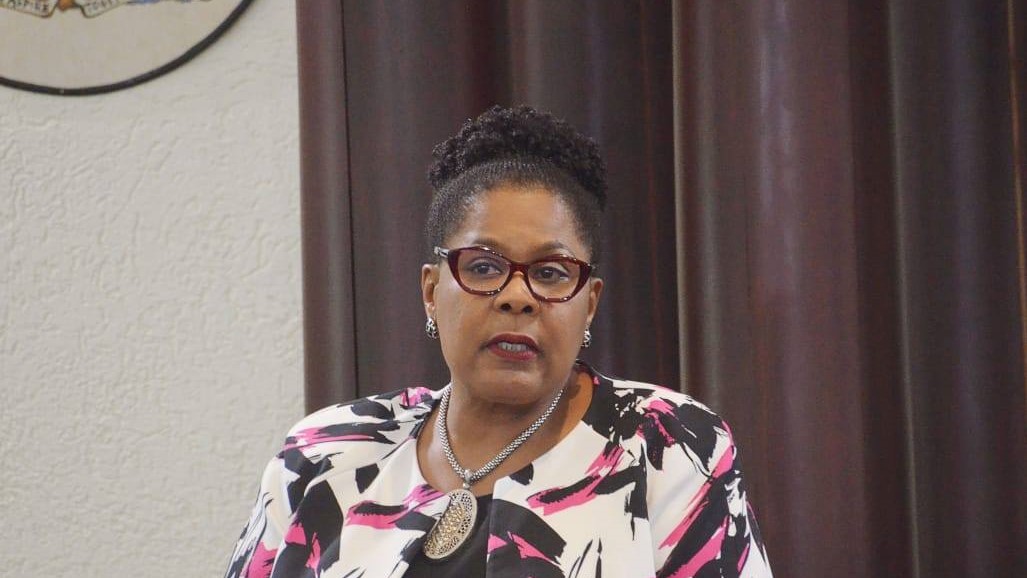
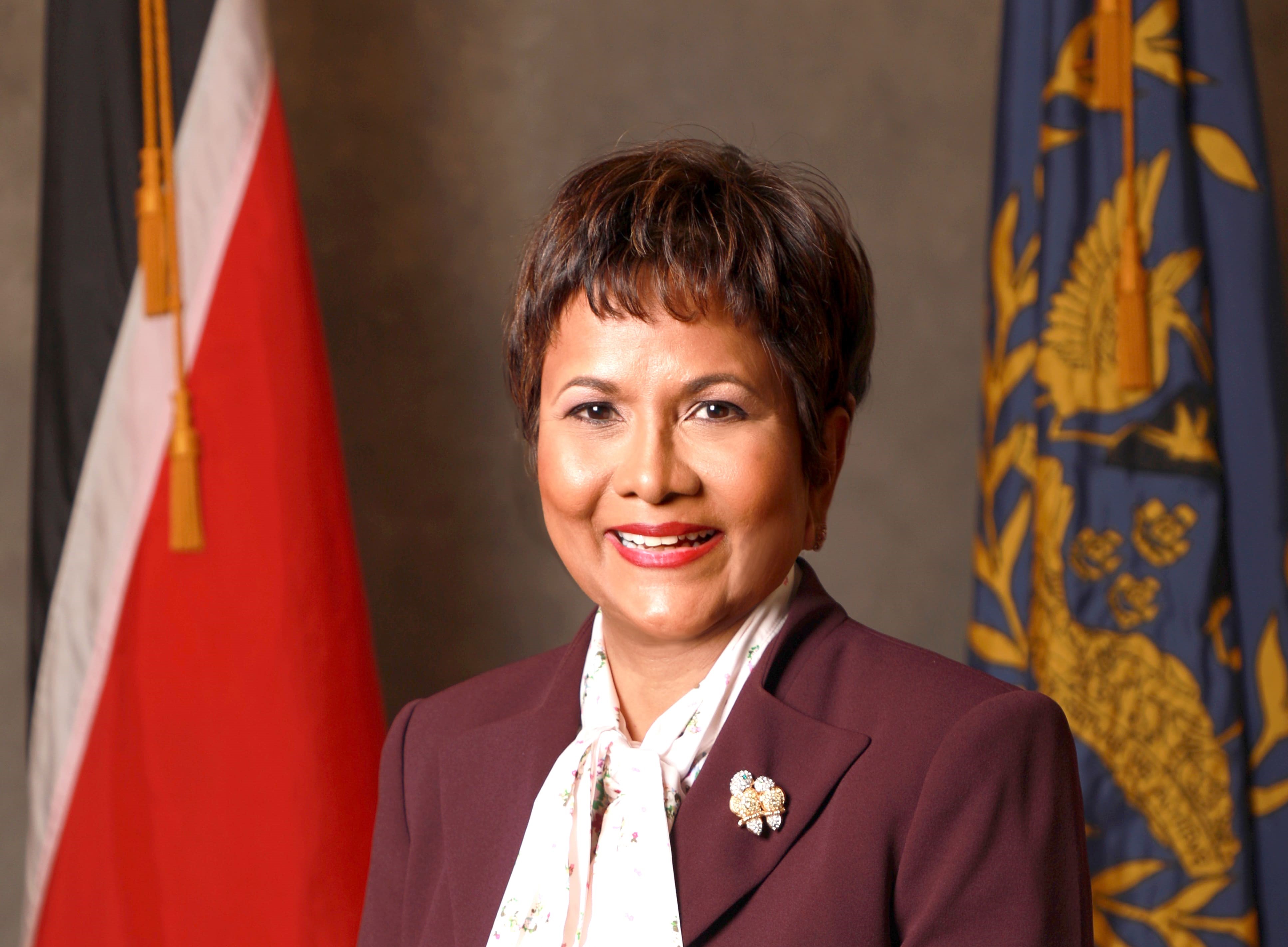
Address by Her Excellency at the 18th Pravasi Bharatiya Divas Convention

Jan 9, 2025

  • The Honourable Shri. Narendra Modi, Prime Minister of the Republic of India;
  • The Honourable Dr. Subrahmanyam Jaishankar, Minister of External Affairs of the Republic of India;
  • Other Ministers of Government of the Republic of India;
  • The Honourable Shri. Mohan Charan Majhi, Chief Minister of Odisha;
  • Chief Ministers of the different States in the Republic of India;
  • Distinguished members of Parliament of the Republic of India;
  • Distinguished Dignitaries from abroad and Members of the Indian Diaspora;
  • Members of the Media
  • Ladies and Gentlemen.

Namaste and Good Morning.

As I speak to you today, I am a bag of mixed emotions.

One part of my heart is filled with happiness and delight at the honour and the privilege which have been bestowed on me to be your Chief Guest at this 18th Pravasi Bharatiya Divas Convention.

Another part of my heart is filled with sadness and regret that circumstances do not make it possible for me to be physically present with you in Odisha today. Ever since I received the momentous news that I had been selected to be the Convention’s Chief Guest this year, I have thought and spoken of little else. My almost every waking hour since then has been filled with anticipation and with planning, as I set about doing everything I could to make sure that all was in place for my travels. When it became clear that circumstances were such that I was not going to be able to travel to be with you in person today, I felt a deep and overwhelming disappointment. That pain is greatest of all today, as I think of all that the Convention offers and means to the Indian diaspora, and of the fact that I am not able to be there in person with you.  While I am grateful for  the technology that allows me to address you today, I am still very much looking forward to the day when I can be with you in person and when I can experience India in all its beauty and majesty, firsthand. I hope and I pray that that day comes soon.

But, the thing that fills my heart the most as I speak with you today, is gratitude to the Republic of India for having chosen, as part of the Convention, to focus on the contributions that the Indian diaspora has made to cultural, social and economic development globally. It is impossible to overstate how uplifting it is to members of the Indian diaspora to know that the country of our origin carves out for us this sacred space during the Convention to reach across the seas, to find us in whatever parts of the world we are, and to embrace us. For us, it is an act of sublime love, poured out upon us by a nation and a people who have made some of the greatest contributions to the upliftment of the world that our planet has ever seen.

India’s contributions to the world’s development are remarkable, and are reputed to include, among many other legendary accomplishments, the fact that the world’s first university is said to have been established in Takshashila in 700BC; Ayurveda is widely acknowledged as the earliest school of medicine known to humans; the art of navigation is said to have been born in the Sindhu river, 6000 years ago; algebra, trigonometry and calculus were first developed in India – with India being the first country in civilization to use the zero as a symbol and in arithmetic operations; the game of chess is believed to have originated in Eastern India; the decimal system is widely acknowledged to have been developed in India; and India’s very own Sushruta is widely acknowledged to be the father of surgery.

That a nation so great should pause and remember its descendants, is, in and of itself, cause for tremendous celebration.  I am therefore immensely thankful that the Republic of India has chosen to shine its powerful light on the contributions that – faithful to the source from which the spirit that animates their efforts comes – the Indian diaspora has made to cultural, social and economic development across the wider world. Over the last two decades, this Convention has served, not only as a platform for collaboration between India and its diaspora, but also as a means of recognising the spirit of resilience, determination and service that has characterised the journey of persons of Indian descent the world over. In conferring the Pravasi Bharatiya Samman Award, the Government and the people of India give powerful expression to their commitment to strengthening the ties between India and all of her children throughout the world.

In the case of persons of Indian descent in Trinidad and Tobago, those ties run deep. India was one of the first countries to establish diplomatic relations with Trinidad and Tobago following our independence from the United Kingdom on  August 31, 1962. But our country’s ties with India long precede that date.  Our relationship goes back to May 30, 1845, when the first ship – the ‘Fatel Razack’ – carrying 225 Indian indentured workers, reached the shores of Trinidad, then a British colony. For 72 unbroken years thereafter, more than 143,000 Indians came from cities and states such as Uttar Pradesh, Bihar, Bengal and many others, reshaping the social, demographic, economic and cultural landscape of Trinidad and Tobago forever. They were a fascinating mix of peoples, languages, traditions and belief systems, all united in search of a new life.

I stand before you (virtually), living that new life, 180 years after the first ships bearing Indian immigrants departed for Trinidad. I am deeply aware of the enormous significance of the voyage these immigrants undertook and of the resilience that was required for them to make the decisions they made, face the challenges they faced and not only survive, but thrive in their adopted homeland. Today, the descendants of those indentured workers, now in their fifth and sixth generations, form nearly 42% of the total population of Trinidad and Tobago – the largest numerical presence of persons of Indian descent anywhere in the Caribbean – and constitute an integral part of the economic, political and social fabric of the country. Trinidad and Tobago has learned and benefitted immensely from the traditions and values of our citizens of Indian descent— we have learned and benefited from the courage, resilience, willingness to sacrifice and steadfastness that they showed throughout all that they endured. As a developing nation, we face many of the same challenges that other developing nations do. But we have the signal advantage of being able to draw upon the rich legacy of the courage and the determination of our citizens of Indian descent; and we have, in doing so, been able to create a stronger, more resilient nation.

And so, I am grateful to India, to my ancestors, and to their values, for helping build Trinidad and Tobago into the nation that it is today. The Trinidad and Tobago that all of its citizens are proud to call their home today, is the product of a mix of many varied and beautiful historical influences, including and especially the influence of our Indian heritage. 

That a nation that owes so much to India, should have one of its citizens selected to be the Chief Guest at this Convention, is an honour beyond compare. I am deeply humbled at having been selected as your Chief Guest and for the honour of being bestowed the Pravasi Bharatiya Samman Award this year. I am humbled to now belong to the group of other awardees from Trinidad and Tobago, including former Prime Ministers Basdeo Panday and Kamla Persad-Bissessar; former government minsters, Winston Dookeran and Dr. Lenny Saith; High Court Judge Justice Frank Seepersad; and our National Council of Indian Culture. I am also humbled to join other Caribbean citizens who have also been bestowed this honour, including Sir Shridath Ramphal; the Honourable Bharat Jagdeo; Yesu Persaud; Kenneth Benjamin; Ramdien Sardjoe; and Guna Sekhar Muppuri – to name only a few. And I am tremendously humbled to have been included among all of this year’s awardees – from Australia to the United States of America – all of them remarkable individuals who have left an indelible mark on their nations, and enriched their societies in countless ways. Their achievements mirror those of the over 30-million strong Indian diaspora around the world, whose influence has shaped and continues to shape the countries they call home. I am humbled by and I am grateful for, all of them.

I am especially grateful today for the ties that continue to bind India and Trinidad and Tobago. I am happy to be able to report that those ties are stronger today than they have ever been, and that both countries continue to benefit immeasurably from each other’s knowledge, experience and expertise. We share unerasable historical ties – including our love of cricket: I am told that Brian Lara is as loved in India, as Sachin Tendulkar is in Trinidad and Tobago; our trade relations are robust – with Trinidad and Tobago exporting iron, steel, ammonia, aromatic bitters and other products to India, while importing pharmaceuticals, cashew nuts, fabrics, diamonds and other goods in return; and we enjoy a rich cultural cooperation, with countless agreements fostering the exchange between us of arts, music and more. India’s kindness and generosity to the people of Trinidad and Tobago are legendary, and have been shown, time and time again, including during the crisis of the COVID-19 Pandemic, when 40,000 doses of COVID-19 vaccines arrived in Trinidad and Tobago, as a result of the gracious response from the Honourable Shri. Narendra Modi, Prime Minister of the Republic of India to a letter sent by the Prime Minister of Trinidad and Tobago. That act of kindness only further strengthened the longstanding relationship between the Governments and people of both countries. Today – by means of this ceremony, and always – by reason of our shared history and values, and by reason of the kindness and generosity that exists between both nations, our hearts are joined with the hearts of the people of India; and our destiny is inextricably entwined with yours. It is my hope and prayer that our nations will continue to thrive, hand in hand, learning from each other, benefiting from each other and growing together.

I have to say that I am also tremendously moved by the emphasis placed on young people in the Convention. Yesterday’s programme was dedicated entirely to the youth – I believe that this can only augur well for the future. The youth are the engine of growth and development in any society; empowering and supporting young people are vital for their and their societies’ growth and development. We all look forward to seeing today’s youth, inspired and encouraged by yesterday’s discussions, taking up the mantle of becoming tomorrow’s leaders.

In closing, I would like to again express my sincere gratitude to the Government of India for the honour of this award. As a daughter of the Indian diaspora; as a national of Trinidad and Tobago; and as a citizen of the world, I thank the Government and the people of India for your continued dedication to and emphasis on the role of the Indian diaspora in achieving a goal common to all people – a safe, harmonious world in which all can grow and thrive in peace and prosperity.

Thank you once again. 
Share:

PreviousHer Excellency to receive the Pravasi Bharatiya Samman Award from the Government of India
NextMessage on New Year’s Day 2025

Related Posts

Remarks from Her Excellency at the Bestowal of Status of Senior Counsel on 13 Attorneys at Law

Remarks from Her Excellency at the Bestowal of Status of Senior Counsel on 13 Attorneys at Law

June 17, 2024

Speech – Special Sitting of the Tobago House of Assembly

Speech – Special Sitting of the Tobago House of Assembly

January 31, 2019

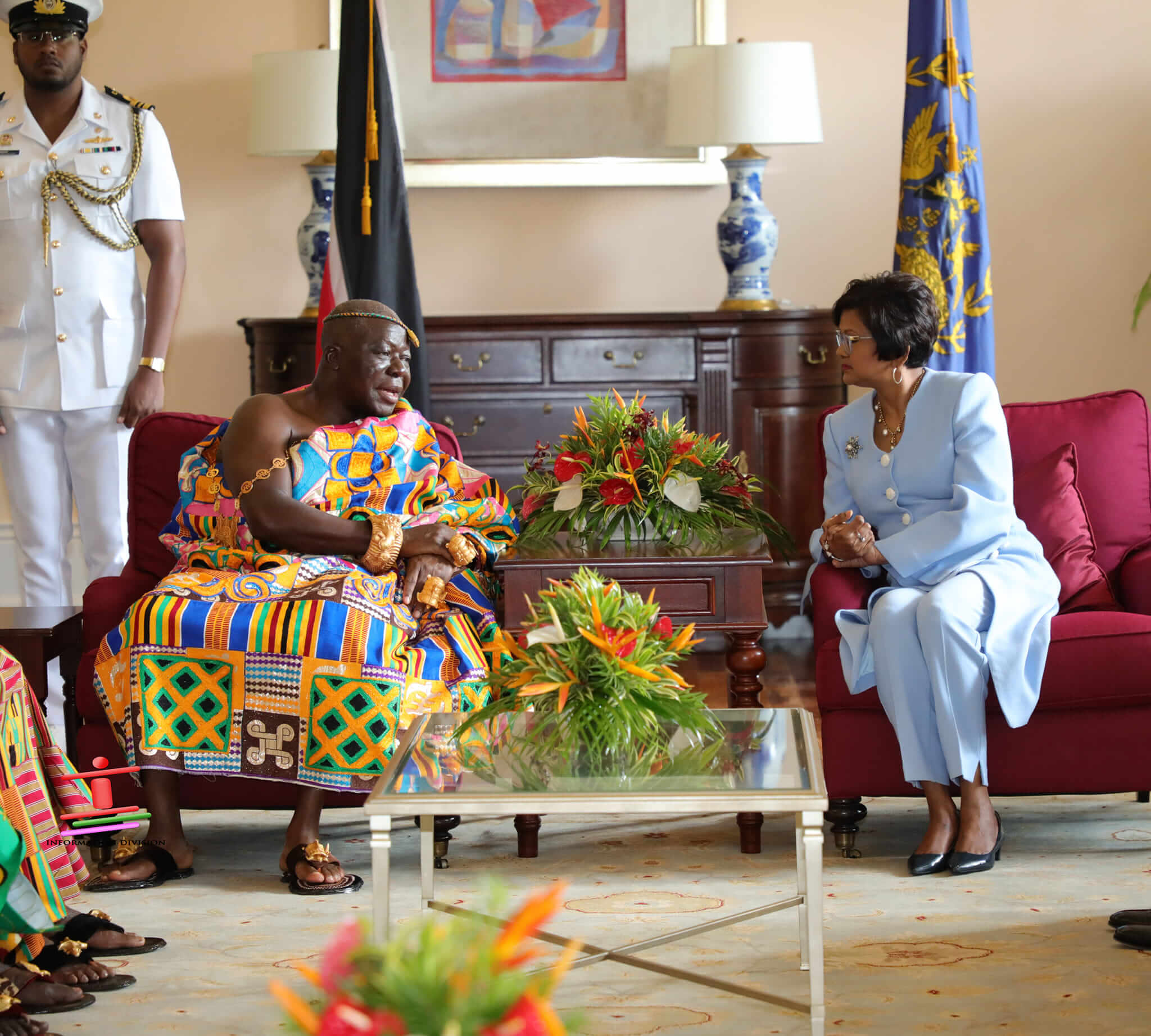
Courtesy Call: His Royal Majesty Otumfuo Osei Tutu II, The Asantehene

Courtesy Call: His Royal Majesty Otumfuo Osei Tutu II, The Asantehene

July 31, 2023

Ramleela returns to The President’s House

Ramleela returns to The President’s House

October 23, 2026

Facebook Feed

Cover for The Office of the President of the Republic of T&T
Page likes: 52,043
The Office of the President of the Republic of T&T(opens in a new tab)

The Office of the President of the Republic of T&T

(opens in a new tab)

The official Facebook Page of The Office of the President of the Republic of Trinidad and Tobago

The Office of the President of the Republic of T&T

2 hours ago

The Office of the President of the Republic of T&T
Shubh Divali! 🪔𝐌𝐞𝐬𝐬𝐚𝐠𝐞 𝐟𝐫𝐨𝐦 𝐇𝐞𝐫 𝐄𝐱𝐜𝐞𝐥𝐥𝐞𝐧𝐜𝐲 𝐂𝐡𝐫𝐢𝐬𝐭𝐢𝐧𝐞 𝐂𝐚𝐫𝐥𝐚 𝐊𝐚𝐧𝐠𝐚𝐥𝐨𝐨 𝐎𝐑𝐓𝐓, 𝐏𝐫𝐞𝐬𝐢𝐝𝐞𝐧𝐭 𝐨𝐟 𝐭𝐡𝐞 𝐑𝐞𝐩𝐮𝐛𝐥𝐢𝐜 𝐨𝐟 𝐓𝐫𝐢𝐧𝐢𝐝𝐚𝐝 𝐚𝐧𝐝 𝐓𝐨𝐛𝐚𝐠𝐨 𝐨𝐧 𝐭𝐡𝐞 𝐨𝐜𝐜𝐚𝐬𝐢𝐨𝐧 𝐨𝐟 𝐃𝐢𝐯𝐚𝐥𝐢 𝟐𝟎𝟐𝟔Today, I join the Hindu community, at home and abroad, and all citizens of Trinidad and Tobago in celebrating Divali, the Festival of Lights.Divali recalls the return of Lord Ram and Mother Sita to Ayodhya after fourteen years of exile. The rows of deyas that welcomed them proclaimed both joy and the enduring triumph of dharma over injustice, knowledge over ignorance, and light over darkness.The deya is small, yet it does not bargain with the darkness; it simply gives its light. Divali therefore calls us not merely to admire goodness, courage and truth, but to practise them—especially when doing so is difficult.Practicing truth, as Divali calls us to do, requires the courage to speak with fairness and responsibility. This responsibility is imposed in both directions. When we speak, we should do so truthfully and without malice; and when we listen, we should receive differing views with patience and generosity. When candour is tempered by compassion, disagreement need not become division, and the exchange of ideas can deepen rather than diminish our common life.As we prepare our homes for the blessings of Sri Lakshmi, let us also make room within ourselves for conscience, compassion and discernment. Let our words bring light rather than heat, and let our differences enlarge, rather than narrow, our sense of common belonging.In our multi-religious and multicultural Republic, Divali is a gift to the whole nation. It reminds us that light is most powerful when shared, and that a country's moral strength is measured not only by the freedoms it proclaims, but by the courage with which its people protect them.May every deya lit this Divali renew in us the wisdom to recognise truth, the courage to speak it responsibly, and the grace to hear it—even when it is difficult. May its light guide Trinidad and Tobago towards a future shaped by truth, justice and mutual respect.I wish the Hindu community and the entire nation a happy, peaceful and holy Divali.Shubh Divali! ...

Photo

View on Facebook (opens in a new tab)
· Share

Share on Facebook (opens in a new tab) Share on Twitter (opens in a new tab) Share on LinkedIn (opens in a new tab) Share by Email (opens in a new tab)

The Office of the President of the Republic of T&T

8 hours ago

The Office of the President of the Republic of T&T
For the second consecutive year, Her Excellency Christine Carla Kangaloo, ORTT, President of the Republic of Trinidad and Tobago and Commander-in-Chief of the Armed Forces, and His Excellency Kerwyn Garcia, SC, First Gentleman, hosted the annual Armistice Dinner at The President’s House on Friday November 6, 2026.Organised by the Combined Officers’ Mess and held ahead of Remembrance Day, also known as Memorial Day, the dinner honoured those who served in the First and Second World Wars and paid tribute to those who lost their lives.Among the guests were the Honourable Chief Justice, Mr Justice Ronnie Boodoosingh, and the Chief of Defence Staff, Commodore Don Polo. Formation Commanding Officers, serving officers of the Trinidad and Tobago Defence Force and retired Chiefs of Defence Staff also attended, along with members of the Diplomatic Corps representing countries that were signatories to the Armistice and heads of divisions of the Ministry of Homeland Security.A special tribute was paid to Colonel Stanly Lucien Johnson (Ret’d), M.O.M., a decorated officer who is 107 years old. Colonel Johnson began his military career in the Trinidad Cadet Corps in 1932, joined the Trinidad Volunteers in 1937 and was mobilised in 1939 at the outbreak of the Second World War. He rose to the rank of Warrant Officer before being commissioned, and went on to serve in the Caribbean and the United Kingdom, with an attachment to the Canadian Army.After joining the Trinidad and Tobago Regiment in 1963, he held several command and staff appointments and went on to serve as Commander of the Defence Force and Commanding Officer of the Regiment from 1968 to 1970. He subsequently represented Trinidad and Tobago as Military Attaché in Washington, D.C.As we honour Colonel Johnson’s distinguished service to Trinidad and Tobago, we remember with gratitude all who served and all who gave their lives.Lest we forget.#ArmisticeDinner #RemembranceDay #LestWeForget #TrinidadAndTobago#OfficeofthePreidenttt ...

Photo

View on Facebook (opens in a new tab)
· Share

Share on Facebook (opens in a new tab) Share on Twitter (opens in a new tab) Share on LinkedIn (opens in a new tab) Share by Email (opens in a new tab)

The Office of the President of the Republic of T&T

2 days ago

The Office of the President of the Republic of T&T
On Wednesday, November 4, 2026, Their Excellencies Christine Carla Kangaloo, ORTT, President of the Republic of Trinidad and Tobago, and Kerwyn Garcia, SC, First Gentleman, attended the 40th Annual Divali Nagar on the sixth night of celebrations. Their Excellencies were first hosted to dinner by members of the National Council of Indian Culture (NCIC) Board of Directors before joining the evening's official proceedings on the main stage.The evening featured displays of talent, creativity and cultural expression as finalists took to the stage for the Trin India Youth Champ Competition and the Meena House Dance Competition. Her Excellency also delivered the feature address, speaking on this year's theme, “Viveka – Discerning Truth in the Age of AI”.See below the full text of the address delivered by Her Excellency.𝐒𝐩𝐞𝐞𝐜𝐡 𝐛𝐲 𝐇𝐞𝐫 𝐄𝐱𝐜𝐞𝐥𝐥𝐞𝐧𝐜𝐲 𝐂𝐡𝐫𝐢𝐬𝐭𝐢𝐧𝐞 𝐂𝐚𝐫𝐥𝐚 𝐊𝐚𝐧𝐠𝐚𝐥𝐨𝐨 𝐎𝐑𝐓𝐓, 𝐏𝐫𝐞𝐬𝐢𝐝𝐞𝐧𝐭 𝐨𝐟 𝐭𝐡𝐞 𝐑𝐞𝐩𝐮𝐛𝐥𝐢𝐜 𝐨𝐟 𝐓𝐫𝐢𝐧𝐢𝐝𝐚𝐝 𝐚𝐧𝐝 𝐓𝐨𝐛𝐚𝐠𝐨 𝐚𝐭 𝐭𝐡𝐞 𝟒𝟎𝐭𝐡 𝐀𝐧𝐧𝐮𝐚𝐥 𝐃𝐢𝐯𝐚𝐥𝐢 𝐍𝐚𝐠𝐚𝐫— “𝐕𝐢𝐯𝐞𝐤𝐚—𝐃𝐢𝐬𝐜𝐞𝐫𝐧𝐢𝐧𝐠 𝐓𝐫𝐮𝐭𝐡 𝐢𝐧 𝐭𝐡𝐞 𝐀𝐠𝐞 𝐨𝐟 𝐀𝐈”— 𝟒 𝐍𝐨𝐯𝐞𝐦𝐛𝐞𝐫 𝟐𝟎𝟐𝟔Sita Ram and good evening.It is always a joy to return to Divali Nagar. My husband and I look forward to this visit every year. Its fusion of religion, culture and tradition - and its welcome to people from every community - make it one of the great treasures of our national cultural calendar.For forty years, the National Council of Indian Culture has sustained this living expression of Indo-Trinbagonian heritage and shared it with the whole nation. I thank its leadership and volunteers, whose devotion carries that inheritance forward.This year’s theme, “Viveka - Discerning Truth in the Age of AI,” joins ancient wisdom to one of the defining questions of our time: how are we to remain faithful to truth when artificial intelligence can create false words, false images and false voices that appear real?Viveka is the faculty of discernment: the union of intellect, conscience and wisdom by which we distinguish truth from falsehood and choose responsibly.That call is woven into Divali itself. The deya signifies knowledge dispelling ignorance, while Lord Rama’s return to Ayodhya signifies dharma and truth overcoming deception and ego. The ancient Sanskrit prayer expresses the same longing: “Lead me from the unreal to the real; lead me from darkness to light; lead me from death to immortality.”When it comes to Artificial Intelligence, I think it would do us well to recognize that humanity has been called to discern truth for far longer than there have been computers or algorithms. Our difficulty with truth did not begin with AI. We were wrestling with deception, prejudice and the abuse of power long before the first machine learned to imitate a human voice.The truth is that Artificial intelligence is not some self-originating, moral actor standing apart from us. It is we who design its systems, supply its data, set its objectives and decide how its products will be used. Even where a machine generates the output, human choices remain embedded in its creation and deployment.When it comes to AI, I think it would also do us well to recognize that AI is therefore not the enemy. It can advance medical research, improve education, assist persons with disabilities and help us solve problems of enormous complexity. We should neither fear it blindly nor embrace it uncritically, but govern and use it wisely.The machine did not invent the lie, prejudice or cruelty. What it can do is give old human failings unprecedented speed, scale and credibility. It can make untruth look authentic, and place an innocent person’s likeness or voice into words and actions that were never theirs. The truth is that AI does not create our brokenness; but it can magnify its consequences.I have experienced this personally. Fake social-media profiles and AI-generated videos purporting to feature me have circulated online. Last year, a gentleman came to the Office of the President intending to invest in a scheme which he believed that I had endorsed. His belief rested upon an AI-generated video. The video was false, but it was convincing enough to prompt a real financial decision.That experience brought home to me that discernment in the age of AI cannot be passive. Before we believe, react or share, we must ask where information came from, whether it can be confirmed independently, and whether our eagerness to believe it arises from evidence - or merely from its agreement with what we already wish to be true.Fabricated images and recordings are not the only obstacles to truth. Truth also becomes harder to discern when fear enters public life, when untested allegations acquire the appearance of fact, when rumour fills the place of reliable information, or when the tone of public discussion makes silence seem safer than honest disagreement.In such conditions, people do not cease to have opinions; they become reluctant to express them. Suspicion grows, trust recedes and misinformation finds fertile ground. A healthy democracy must permit difficult questions and respectful criticism, while requiring all of us to distinguish allegation from evidence and to speak truthfully, fairly and responsibly.Words, too, require discernment. In the age of AI, each of us can become not only a recipient of information, but its unwitting publisher and amplifier. Before forwarding or repeating, we should ask whether it is true, whether its context has been preserved and what consequences may follow once it travels beyond our control. The wider our reach, the greater our duty of care.A focus of my Presidency is young people. When it comes to AI and young people, I believe that our young people must learn not merely to operate intelligent machines, but to remain intellectually independent in their presence. AI can assist research and overcome barriers to learning; but an answer generated, is not necessarily an answer understood. Education in the age of AI must therefore cultivate curiosity, source-checking, ethical judgment and confidence in their own authentic voices.Beyond the nation’s youth, I believe that there is also a vital cultural task before us. AI can help preserve and share our records, oral histories, music, art and traditions. Yet systems trained mainly upon larger societies may misunderstand, flatten or omit the distinctive voice of a small and plural nation such as ours. Technology may preserve a recording; but only communities can preserve its meaning. That is why Divali Nagar matters in the age of AI. It is not culture summarized, but culture lived - in worship, performance, food, craft, voluntary service and the meeting of one generation with another.As Trinidad and Tobago embraces artificial intelligence, we must ensure that its benefits do not belong only to those with wealth, technical expertise or access to the best-resourced institutions. AI must serve human dignity, not reproduce old prejudices in new forms, and must remain transparent enough to be questioned, accountable enough to be corrected and inclusive enough to serve every community.Although Viveka comes to us from Hindu thought, its call to truth, wisdom and moral responsibility speaks across every faith and culture. In our multi-religious and multicultural society, our traditions are not obstacles to technological progress. They are among the moral resources by which progress can be kept human.The defining question is not simply whether machines will become more intelligent, but whether human beings will become more discerning. Will we use these extraordinary tools to enlarge knowledge and opportunity, or to manufacture deception and deepen exclusion? The answer will not be found in technology alone, but in the quality of our judgment and the courage with which we remain faithful to truth, and to the pursuit of “Viveka”. Our challenge is to let artificial intelligence enlarge our capacities, but never replace our conscience; to let it assist our judgment, but never excuse us from exercising it.In the age of AI, may that ancient Sanskrit prayer continue to guide us: from the unreal to the real; from darkness to light; from ignorance to understanding. And may the light that we kindle in our deyas also kindle within us the wisdom to recognise truth, the courage to speak it responsibly, and the humanity to use it for the good of all.I thank the NCIC once again for the extraordinary gift that is Divali Nagar, and for inviting the nation to consider a theme so important to our time. In the age of AI, the lamp of Viveka must remain in human hands.I wish you and the entire nation a happy and holy Divali.Shubh Divali, and may God bless our nation.-END- ...

Photo

View on Facebook (opens in a new tab)
· Share

Share on Facebook (opens in a new tab) Share on Twitter (opens in a new tab) Share on LinkedIn (opens in a new tab) Share by Email (opens in a new tab)

The Office of the President of the Republic of T&T

3 days ago

The Office of the President of the Republic of T&T
#AsItHappens Following dinner with members of the Board of the National Council of Indian Culture (NCIC) and invited guests, Their Excellencies Christine Carla Kangaloo, ORTT, President of the Republic of Trinidad and Tobago, and Kerwyn Garcia, SC, First Gentleman, arrive at the main stage at Divali Nagar for this evening’s highly anticipated programme.Tonight, the spotlight is on talent, creativity and cultural expression as the finalists take to the stage for the Trin India Youth Champ Competition and the Meena House Dance Competition.It’s competition night at the Nagar! ...

Video

View on Facebook (opens in a new tab)
· Share

Share on Facebook (opens in a new tab) Share on Twitter (opens in a new tab) Share on LinkedIn (opens in a new tab) Share by Email (opens in a new tab)

The Office of the President of the Republic of T&T

4 days ago

The Office of the President of the Republic of T&T
#HappeningNowTheir Excellencies, Christine Carla Kangaloo, ORTT, President of the Republic, and Kerwyn Garcia, SC, First Gentleman, are greeted by NCIC President Dr. Surujdeo Mangaroo and First Vice President Professor Arvind Singh, along with their spouses, upon their arrival at Divali Nagar. ...

Video

View on Facebook (opens in a new tab)
· Share

Share on Facebook (opens in a new tab) Share on Twitter (opens in a new tab) Share on LinkedIn (opens in a new tab) Share by Email (opens in a new tab)

Categories

  • Appointments
  • Courtesy Calls
  • Featured
  • Galleries
  • Media Releases
  • Messages and Speeches
  • Multimedia
  • News & Events
  • Other Events
  • Presentations of Credentials
  • Publications
  • Videos

  • THE PRESIDENT
  • Christine Carla Kangaloo
  • Role and Function
  • Extracts from the Constitution
  • The President’s House
  • Forms of Address
  • History of the Presidency
  • Did You Know?

  • TRINIDAD AND TOBAGO
  • National Anthem
  • National Symbols
  • National Holidays and Festivals
  • State Structure
  • National Awards
  • Ceremony
  • Database/Past Ceremonies

  • NEWS AND EVENTS
  • Press Releases
  • Messages and Speeches
  • Appointments
  • Presentations of Credentials
  • Courtesy Calls
  • Other Events
  • Galleries

Contact

President of the Republic of Trinidad and Tobago
Office of the President
Circular Road
St Ann’s
The Republic of Trinidad and Tobago

Telephone: (868) 225-4687
Email: otp.mail@otp.gov.tt

Designed by Elegant Themes | Powered by WordPress