
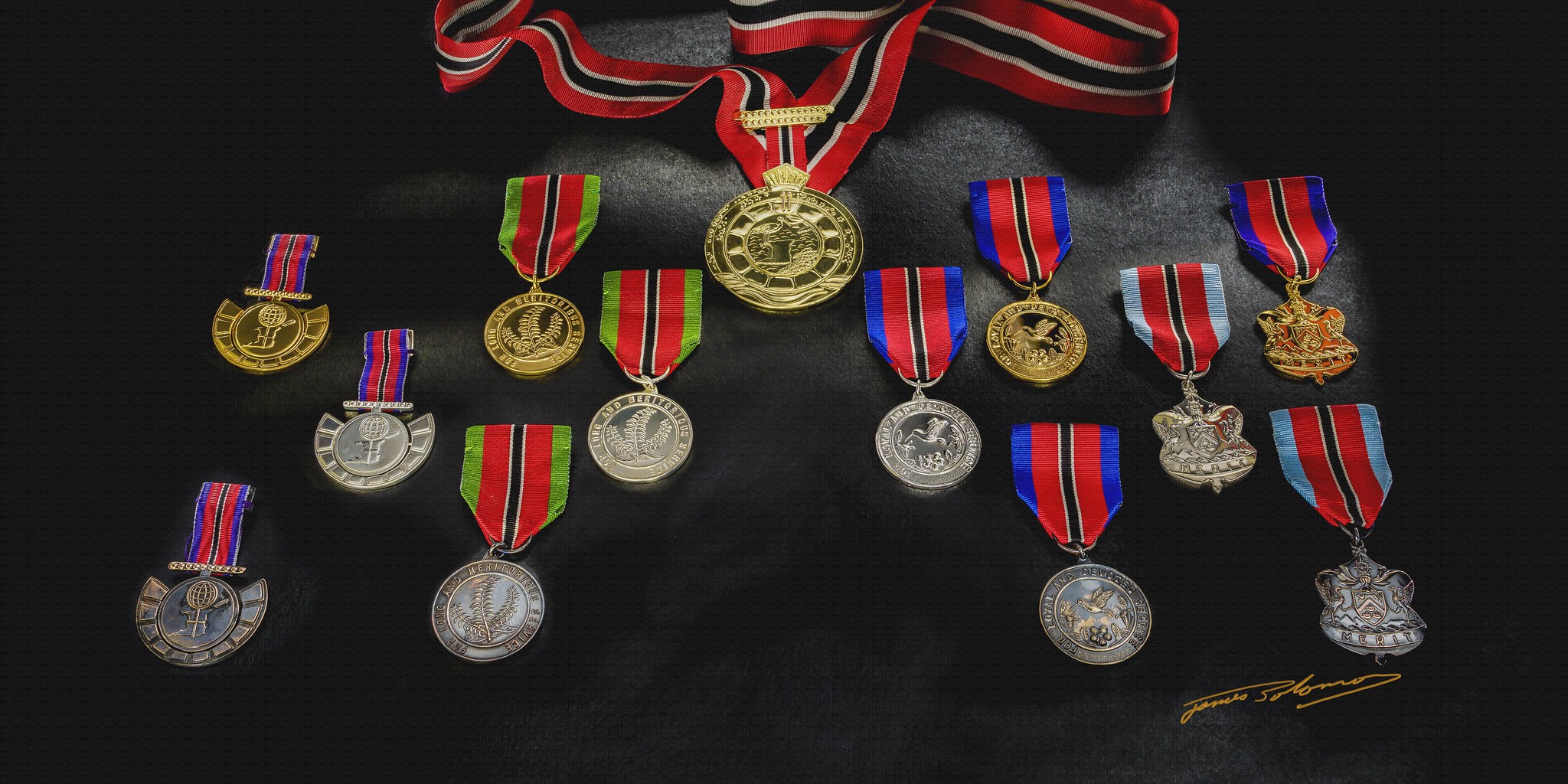
A National Awards Committee, headed by the Chief Justice, oversees the nomination process and investigates nominees before making recommendations to the Prime Minister. Any person or organisation may nominate a citizen for a National Award. The President confers the awards on the advice of the Prime Minister, given after consideration of the recommendation of the Advisory Committee. The President hosts the National Awards Ceremony annually on Republic Day, September 24th.
There are five (5) categories and thirteen (13) classes of National Awards:
- The Order of the Republic of Trinidad and Tobago (formerly The Trinity Cross Medal of the Order of the Trinity) in Gold only
- The Chaconia Medal in Gold, Silver and Bronze
- The Hummingbird Medal in Gold, Silver and Bronze
- The Public Service Medal of Merit in Gold, Silver and Bronze
- The Medal for the Development of Women in Gold, Silver and Bronze
Every citizen of Trinidad and Tobago, on being awarded a National Award, becomes a Member of The Distinguished Society of Trinidad and Tobago of which the President is Chancellor. Every non-citizen, on being awarded a National Award, becomes an Honorary Member of the Distinguished Society.
Only citizens of Trinidad and Tobago are eligible for the award of the Public Service Medal of Merit. Non-citizens are eligible for all other awards.
All National Awards may be awarded posthumously, but a deceased recipient does not become a Member of the Distinguished Society.
THE ORDER OF THE REPUBLIC OF TRINIDAD AND TOBAGO
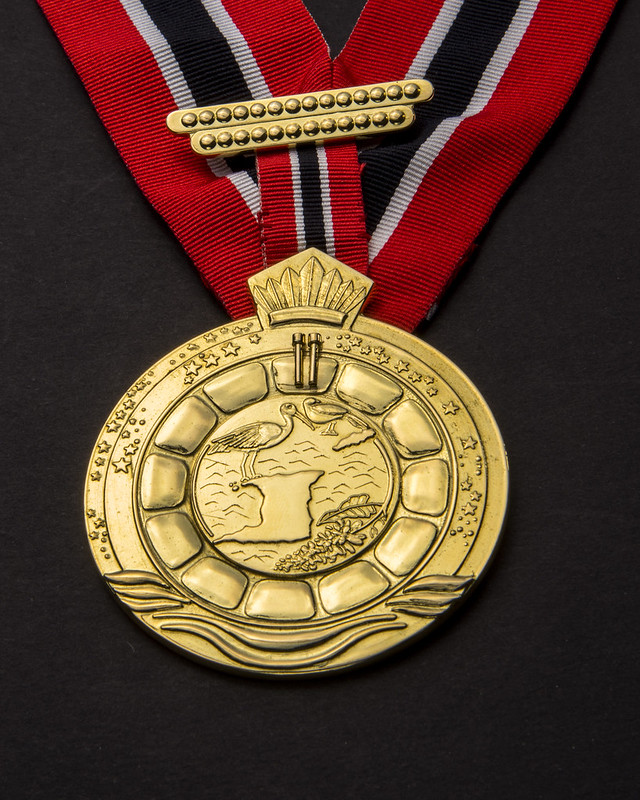
The ORTT was introduced in 2008 to replace the Trinity Cross as Trinidad and Tobago’s highest national award. Its design was developed by artist Gillian Bishop. The original prototype was hand-sculpted in teak and ebony with sterling silver details before being transferred to a die from which the medals were struck.
The design tells the story of Trinidad and Tobago through four principal elements: the First Peoples; the people who came The design brings together four principal elements that tell the story of Trinidad and Tobago: the nation’s First Peoples, the people who came from around the world, the steelpan and the twin-island nation itself.
The crest is represented by the feathered headdress of an Amerindian chief, acknowledging the nation’s First Peoples. The medal’s circular form is inspired by the tenor steelpan, with its twelve outer notes representing the diverse social and cultural contributions made by the people of Trinidad and Tobago. Waves and constellations represent the journeys of people from around the world and the cultural influences they brought with them. At the centre, the islands of Trinidad and Tobago are depicted alongside the Scarlet Ibis, Mot Mot and Chaconia.
The ORTT is die-struck in 18-carat yellow gold and suspended from a short ribbon in the national colours of red, white and black. The reverse bears the inscription “Order of the Republic.”
The ORTT was first conferred in 2008 on Professor Brian Copeland, Mr Bertram “Bertie” Lloyd Marshall and Mr Anthony Williams, in recognition of their outstanding contributions to the development of the steelpan.
THE CHACONIA MEDAL
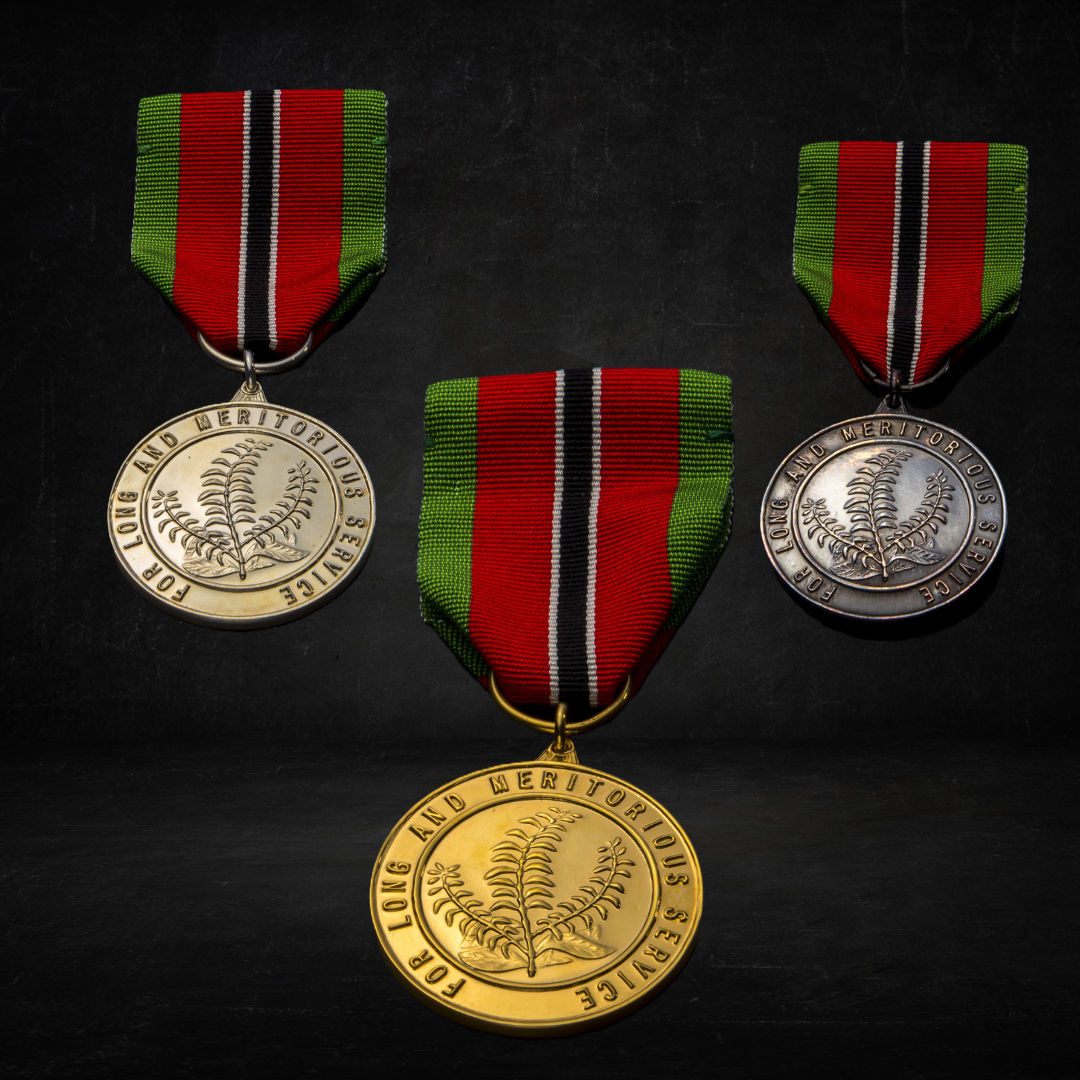
The medal features the Chaconia, after which it is named, and bears the inscription “For Long and Meritorious Service.” The identifying colour on the borders of the ribbon is light green. The Chaconia Medal was designed by Mrs A. Jardine.
THE HUMMINGBIRD MEDAL

The medal features a hummingbird in flight, with the inscription “Loyal and Devoted Service” encircling the design. It was conceptualised by the designers of Messrs Y. DeLima and Co. Limited. The identifying colour on the borders of the ribbon is royal blue.
THE PUBLIC SERVICE MEDAL OF MERIT
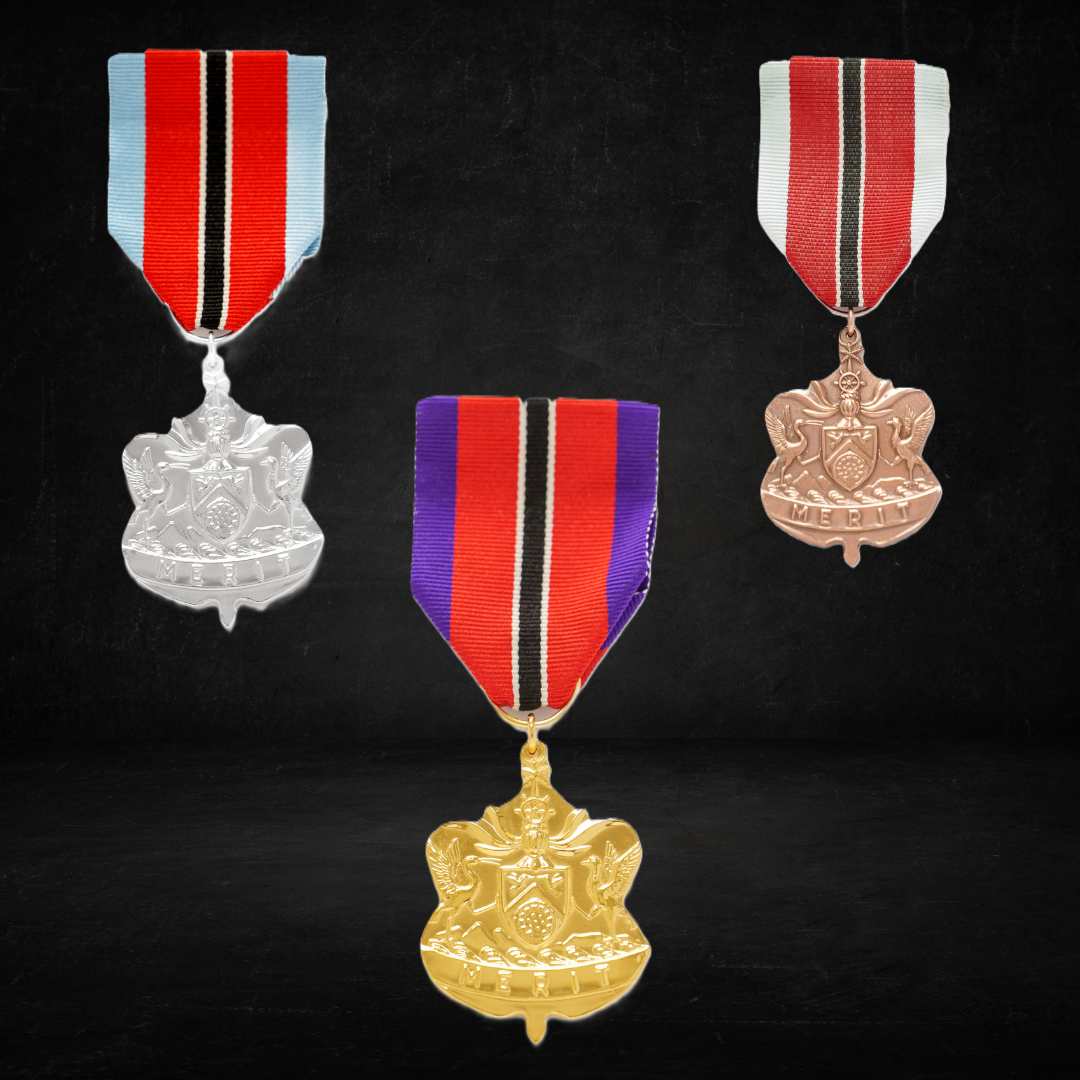
The medal features the Coat of Arms of Trinidad and Tobago at its centre, with the word “MERIT” prominently displayed along the lower edge. Mr Ebenezer Edwards designed the Public Service Medal of Merit. The identifying ribbon colours are purple for Gold, light blue for Silver and silver for Bronze.
THE MEDAL FOR THE DEVELOPMENT OF WOMEN
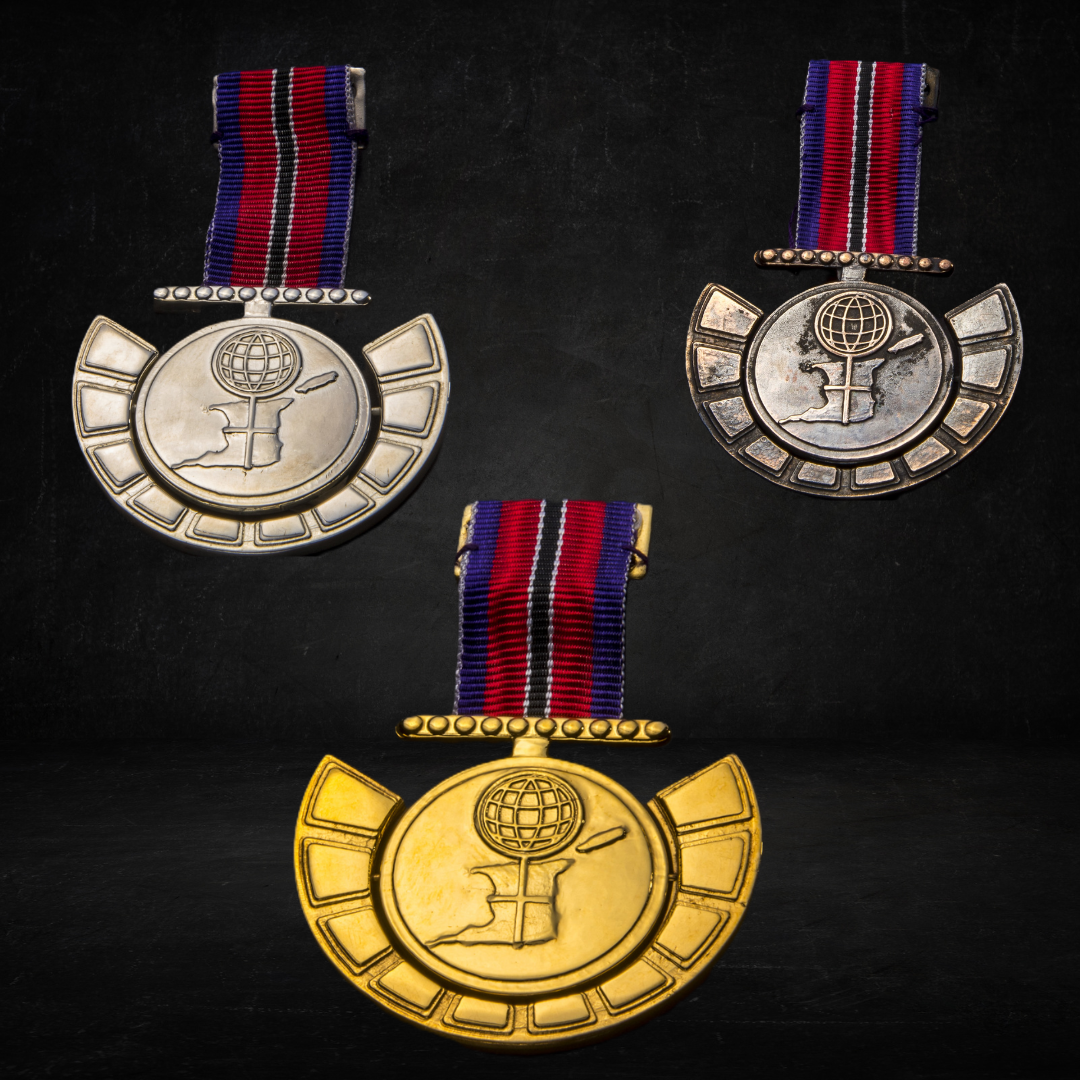
The medal features a stylised representation of a woman, positioned above the outlined shape of Trinidad and Tobago. Ms. Gillian Bishop designed the award, which has a purple identifying ribbon colour.
The Medal for the Development of Women was first presented in 2011 to Mrs Hazel Brown, Mrs Diana Mahabir-Wyatt and Mrs Brenda Gopeesingh for their contributions in the sphere of community service.


