The Office of the President of the Republic of Trinidad and Tobago
  • Home
  • 50/150 Anniversary
    • Overview
    • Public Tours
    • Photo Gallery
  • The President
    • Christine Carla Kangaloo
    • First Gentleman
    • Role and Function
      • Extracts from the Constitution
    • The President’s House
    • Greeting the President
    • History of the Presidency
    • Did You Know?
  • Trinidad and Tobago
    • National Anthem
    • National Symbols
    • National Holidays and Festivals
    • State Structure
    • National Awards
      • National Awards Ceremony
      • Database of National Awardees
  • News & Events
    • Press Releases
    • Presentations of Credentials
    • Courtesy Calls
    • Appointments
    • Messages and Speeches
    • Other Events
    • Photo Galleries
  • Contact

Select Page

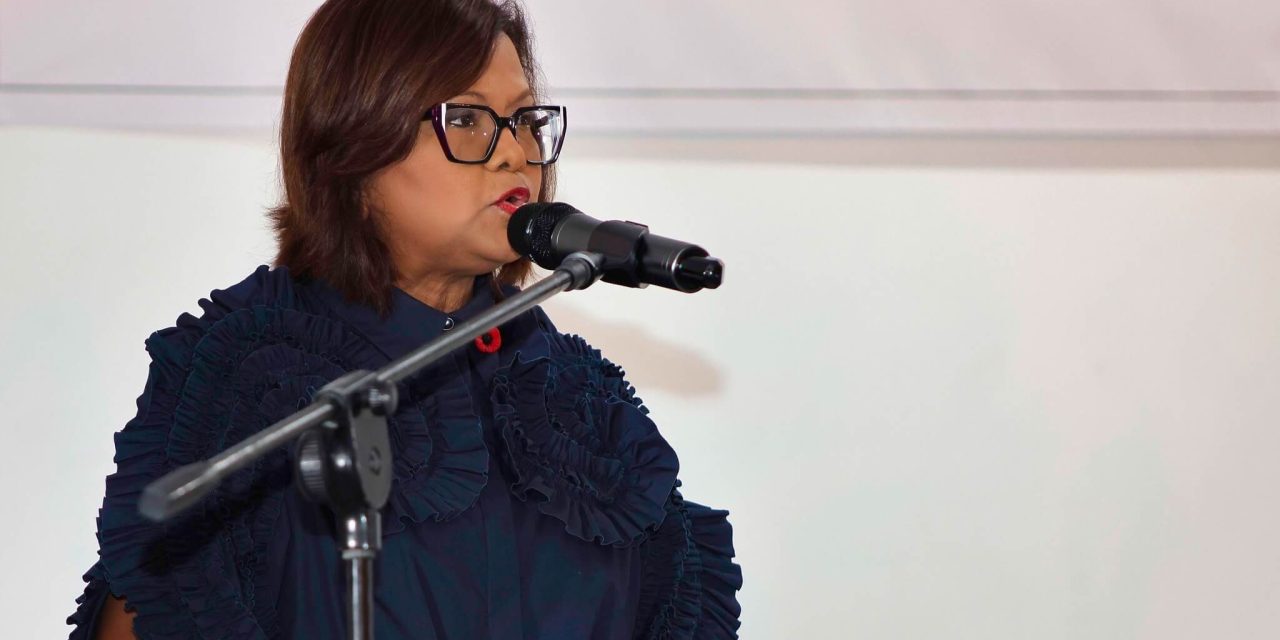
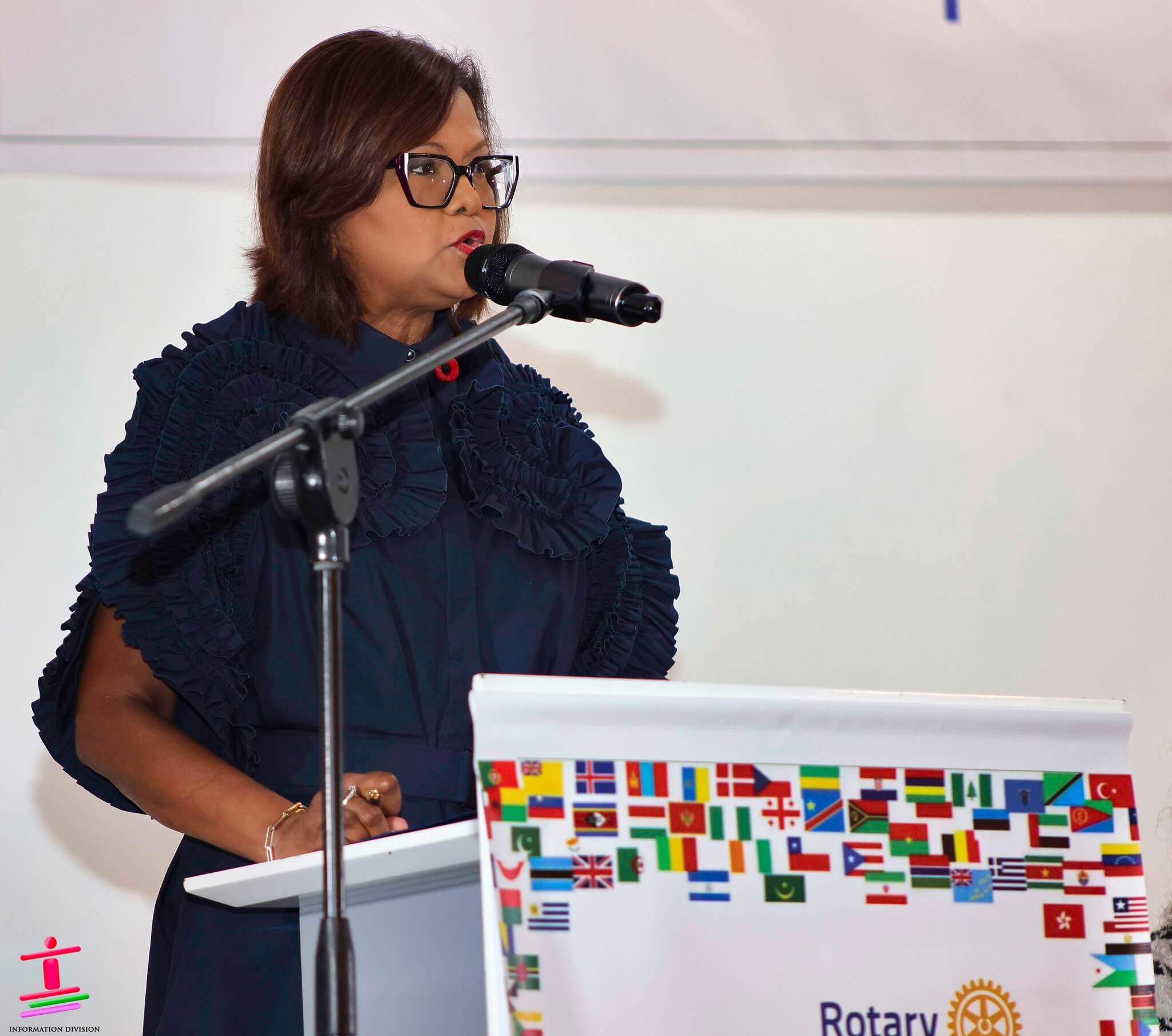
Feature Address at the Rotary Club of Central POS Model UN Conference

Nov 8, 2025

Feature Address at the Rotary Club of Central POS Model UN Conference

Good morning.

I am delighted to join you today to open this 25th edition of the Model United Nations, hosted and organised so faithfully each year by the Rotary Club of Central Port of Spain. What a remarkable milestone, and what a privilege it is to celebrate it with you.

‘To model’ means ‘to follow’ or ‘to imitate’, and one of the ideas behind the hosting of this Model United Nations programme is to have its participants follow or imitate the workings of the United Nations. And so, one of the questions which participants in the programme need to ask themselves, is what exactly is it that I am following or imitating as I participate in the programme? Who is this ‘United Nations’ that I am going to be ‘modelling’?

If we do a ‘Google search’ or ask ‘Chat GPT’ this question, the answer we get is that the United Nations is (as we have heard this morning)  an international organization founded in 1945 by 51 countries to maintain global peace and security, develop friendly relations among nations, and promote social progress, human rights, and better living standards. If we do a little more research, we will learn that the UN was founded following the devastation of World War II, in order to prevent future global conflict. We will discover that, at a Conference held between April to June in 1945 in San Francisco in the United States, representatives of 50 nations drafted and signed the United Nations Charter, and thereby created a new organization “to save succeeding generations from the scourge of war.” We will also learn that the UN in fact succeeded an earlier organization called “The League of Nations”, which had been created in 1919 after World War I in order to prevent another World War, but which failed in its mission. And we will discover that The League formally transferred its assets to the UN in April 1946; that the UN officially came into existence on the 24th of October 1945; and that today, it has (as we have heard) 193 Member States.

What all of this tells us, is that the United Nations came about as a result of a decision taken by countries of the world to never again permit a world war.  It is the result of a decision taken to maintain international peace and security, through the collective action of its Member States. The United Nation’s core purpose, is (as we have heard) the peaceful resolution of disputes. It achieves its purpose by promoting friendly relations among nations. It fosters international cooperation in solving economic, social, cultural, and humanitarian problems, and in upholding human rights and fundamental freedoms for all of the Earth’s citizens. It serves as a centre for harmonizing the actions of nations in pursuit of these shared goals. In a word, the United Nations is about maintaining peace.

That is the organization, and these are the goals that, as participants in this Model United Nations programme, you are going to be called upon to follow or imitate. You are going to be called upon to follow or to imitate, pathways to peace.

Peace is something that is becoming increasingly elusive in today’s world. Today, in almost every continent on Earth, we see the brutality and the horror of war. Major ongoing wars and conflicts at this time include the Russia-Ukraine war, the conflict in Sudan, the Syrian civil war, and the Yemeni civil war. Other significant conflicts of the day involve gang violence in Haiti, the conflict in Myanmar, and the Israeli-Palestinian conflict, which includes ongoing hostilities in Gaza and southern Lebanon. This year’s Model United Nations programme therefore comes at a critical time in the affairs of the world. By immersing its participants in the workings of the United Nations, it exposes young people – students from schools across Trinidad and Tobago and the region – to pathways to peace. And, by exposing young people to pathways to peace, it enhances the chances that, as they emerge from the programme, these young people will themselves become proponents of peace in their own individual fields of endeavour. It improves the prospects that these young people will help create a world in the future, in which the wars and conflicts of today are resolved, and become things of the past.

The true impact of this programme will be felt after its participants have completed it. It will be felt in the ways in which its participants continue, long after the programme is over, to follow and to imitate, pathways to peace.  The challenge to participants in this programme, is not only to master the skills of research and public speaking that are required in order to succeed in the programme. The challenge to participants is also to apply the lessons learned during the programme, to achieve peace in the places and in the communities which they inhabit. 

This is a difficult challenge. One of the difficulties which participants will face in following and imitating pathways to peace in the places and in the communities which they inhabit, is the fact that, as I have said, there are wars and conflicts of all kinds, all around us. It will be difficult for them, in the communities which they inhabit, to sell ideas of peaceful and collaborative co-existence, when so many examples of the exact opposite abound. Another challenge they will face, particularly in Trinidad and Tobago, is the general tone of discourse in our society of late, which is often caustic and corrosive. Participants emerging from out of this year’s programme will have to contend with the widespread use of language in the public space that tends more often to divide and tear down, than it does to heal divisions and to build up – language that is antithetical to the values and the core purpose of the United Nations.

Because of matters such as these, it will be difficult for participants in this year’s programme to apply, in the places and in the communities which they inhabit, the lessons learned during the programme. The environment which they inhabit is, by reason of these matters, an environment that is hostile to following and imitating pathways to peace. But ‘difficult’ does not mean ‘impossible’. It simply means that what you are reaching for is valuable enough to require great effort. Difficult situations are not a dead end, but rather a test of persistence, resilience, and effort.

I believe in the young people of our country and of our region. I believe in their capacity to do things and to go to places which my own generation has not done and to which my own generation has not gone. I believe in our young people’s ability to tackle and to solve the intractable problems of our time, one small step at a time. A seed pushes through heavy soil and darkness before it ever sees the sun. In the same way, the strength of our nation’s and of our region’s young people is revealed when they keep going, even when the path feels dark and heavy. The invitation that this year’s programme extends to all of its young participants, is to do precisely that: to keep going – to keep following and imitating pathways to peace – even when the environments which you inhabit feel hostile to the enduring peace which you are trying to accomplish. And I believe that you can do that. In fact, the plain and simple truth is that unless you do that, the whole world runs the risk of plunging itself into yet another World War; and the United Nations itself will be at risk of becoming another “League of Nations”, which fails in its mission. These are not risks which we should be prepared to run. These are the risks against which you, our young participants in this year’s programme, have the sacred and the solemn duty to guard.

For twenty-five years, this programme has engaged curious young minds across the country, and now, across the region, developing in them valuable skills in diplomacy, research, public speaking, negotiation and collaboration. For twenty-five years it has enabled its young participants to unlock their confidence, strengthen interpersonal skills and discover hidden talents, providing a clear pathway to realising their fullest potential. Since inception, over two thousand students have benefitted from this powerful initiative. Many of those alumni now serve in leadership roles across diverse fields in our country and in the region, a record of which Rotary can be justifiably proud.

Permit me therefore to express, unreservedly, my admiration and gratitude to the Rotary Club of Central Port of Spain for its steadfast dedication to this initiative and for ensuring its continued success over the past quarter century. Your work stands as testament to the Rotary motto of ‘Service above Self’ and reflects its longstanding investment in young people, and its belief in the power of education to transform lives. By preparing the next generation of leaders, though participation in this programme, to be resourceful, compassionate and capable, the Rotary Club of Central Port of Spain has helped, and is helping, to guide our nation, our region, and indeed our world, towards a brighter and more peaceful future. For this, you have my admiration and my thanks.

And so, as we celebrate twenty-five (25) years of the Rotary Club of Central Port of Spain’s Model United Nations programme, let us honour this rich legacy by continuing to invest in our youth. Let us continue to support programmes that equip young people with the skills to communicate effectively, work well with others and contribute meaningfully to their communities and nations.

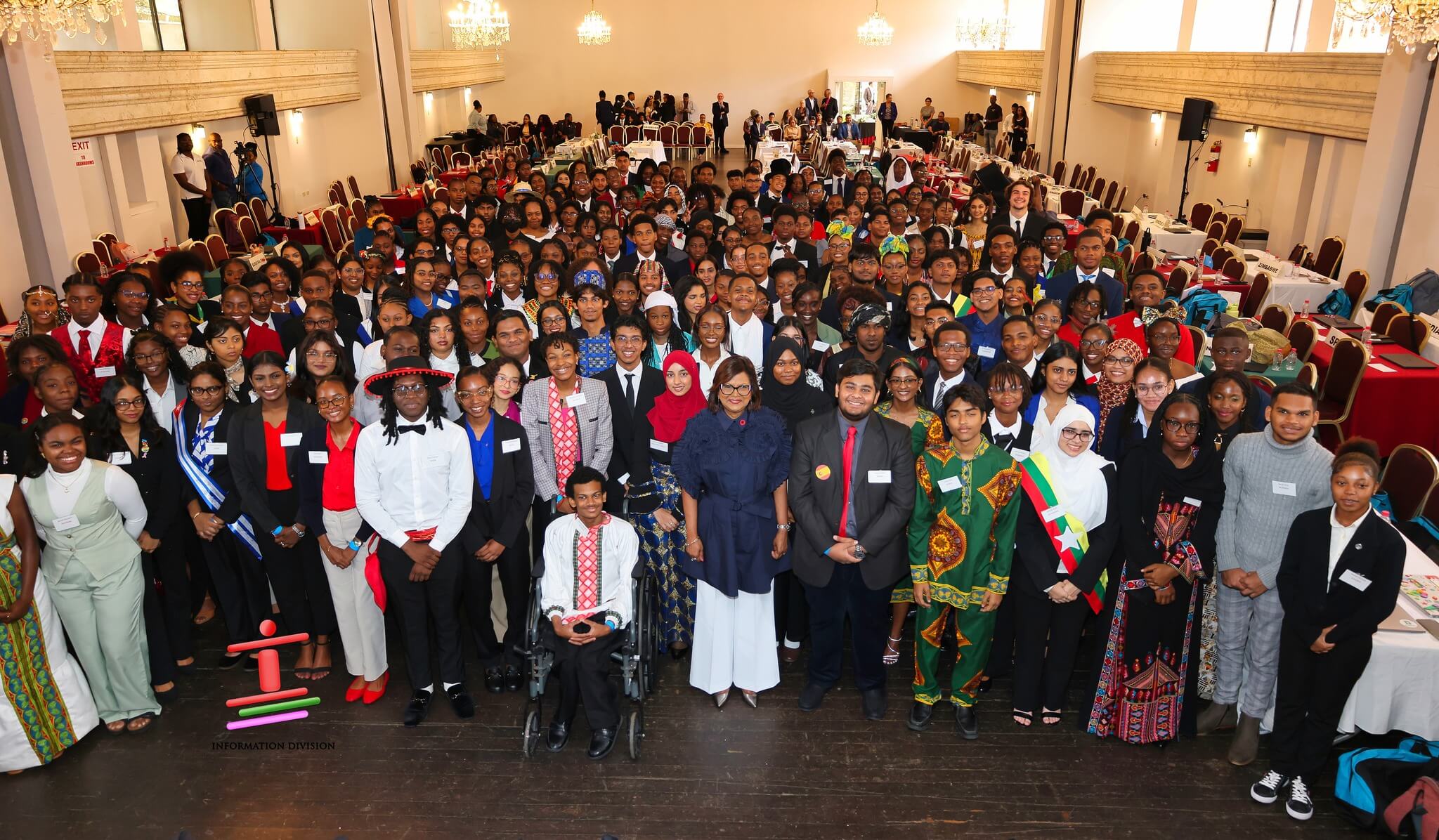
This year’s conference is particularly noteworthy. With 210 participants, double the usual number, and the inclusion of delegates from Montserrat, Antigua, St. Vincent, Curaçao and Grenada, the event has taken on a truly regional character. I warmly welcome our visiting delegates, and hope that your experience here will strengthen the bonds of friendship and cooperation across our Caribbean family. By working together in this Model United Nations, you deepen the bonds of friendship and solidarity that link our Caribbean nations.

My dear young people, I would like to congratulate and commend you for choosing to take part in this simulation and for expanding your knowledge, skillset and understanding of the world around you.

I hope that this experience inspires you to see yourselves not only as students or representatives, but as peacemakers capable of creating a world in which fairness, justice, and respect are the norm. A world in which we all would want to live.

Thank you, and I wish you every success in your conference.
Share:

PreviousHer Excellency attends 25th Annual Model United Nations Conference
NextHer Excellency lays wreath at Cenotaph on Remembrance Day

Related Posts

Speech at the Princes Town Presbyterian No. 1 School Graduation Ceremony

Speech at the Princes Town Presbyterian No. 1 School Graduation Ceremony

June 21, 2024

Presentation of Credentials: Ambassador of Azerbaijan and Ambassador of the Argentine Republic

Presentation of Credentials: Ambassador of Azerbaijan and Ambassador of the Argentine Republic

June 5, 2024

Farewell Courtesy Call from the outgoing Ambassador of the Kingdom of the Netherlands

Farewell Courtesy Call from the outgoing Ambassador of the Kingdom of the Netherlands

January 26, 2023

Mr. Ian R. De Souza appointed as Chairman of the Salaries Review Commission

Mr. Ian R. De Souza appointed as Chairman of the Salaries Review Commission

December 7, 2024

Facebook Feed

Cover for The Office of the President of the Republic of T&T
45,774
The Office of the President of the Republic of T&T

The Office of the President of the Republic of T&T

The official Facebook Page of The Office of the President of the Republic of Trinidad and Tobago

The Office of the President of the Republic of T&T

1 day ago

The Office of the President of the Republic of T&T
Media ReleaseSENATE PRESIDENT WADE MARK SWORN IN AS ACTING PRESIDENTThe Office of the President advises that the President of the Senate, the Honourable Wade Mark, was sworn in as Acting President of the Republic of Trinidad and Tobago on Saturday August 8, 2026.The oath of office was administered by the Honourable ,The Chief Justice, Mr. Justice Ronnie Boodoosingh.His Excellency Wade Mark will perform the functions of President during the absence from the country of Her Excellency Christine Carla Kangaloo, ORTT, President of the Republic of Trinidad and Tobago. ... See MoreSee Less

Photo

View on Facebook
· Share

Share on Facebook Share on Twitter Share on LinkedIn Share by Email

The Office of the President of the Republic of T&T

2 days ago

The Office of the President of the Republic of T&T
Thank you for your tremendous response!The Office of the President sincerely thanks everyone who registered for the President’s House Heritage Tours and Exhibition. We are delighted by the overwhelming public interest and truly appreciate your enthusiasm and support.We apologise for the delay, as the exceptionally high number of applications required additional time for careful review and the completion of mandatory security checks.Kindly note: 1. Successful applicants will receive a confirmation email the week August 10-14, 2026 for the first week of tours, August 17-21, 2026.2. Successful applicants for the second week of tours, August 24-28, 2026, will receive their confirmation email the week of August 17-21, 2026Applicants are encouraged to:📩 Monitor your inbox for email from noreply@bookeo.com🔍 Check spam or junk folders🪪 Ensure you have a valid form of identification ready if confirmedPlease note that registration did not guarantee a confirmed booking. Applications may be unsuccessful where registration information was incomplete or the necessary security requirements were not satisfied.Thank you for your patience and understanding. We look forward to welcoming our approved visitors to the President's House.Keep monitoring our social media pages for guidelines and updates ... See MoreSee Less

Photo

View on Facebook
· Share

Share on Facebook Share on Twitter Share on LinkedIn Share by Email

The Office of the President of the Republic of T&T

3 days ago

The Office of the President of the Republic of T&T
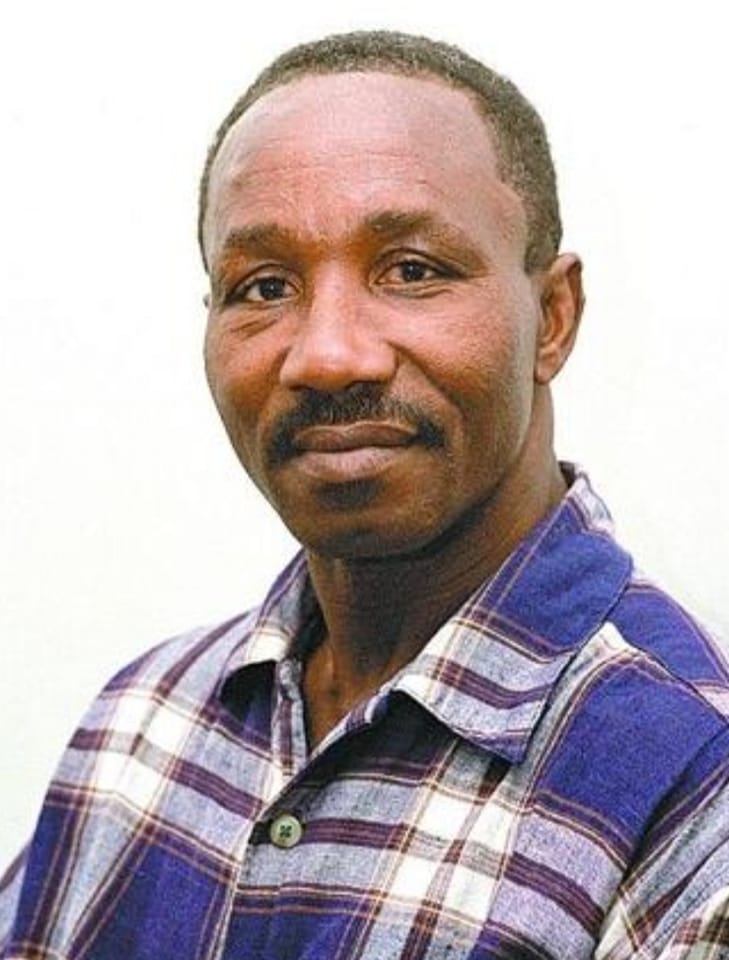
His Excellency Wade Mark, Acting President of the Republic of Trinidad and Tobago, extends heartfelt condolences to the family, friends, colleagues and all those who were inspired by the life and work of cultural icon and artistic polymath William "Willi" Chen.Mr. Chen’s life was distinguished by an extraordinary breadth of creative and practical endeavour. As a sculptor, painter, playwright, writer, stage designer, architect, engineer, inventor and entrepreneur, he applied his imagination and ingenuity across a remarkable range of disciplines. Largely self-taught, he worked with materials as varied as steel, wood and concrete, while also finding expression through theatre and the written word.His contribution to the nation is reflected in works such as Solar Marinorama, the monumental steel sculpture at the Central Bank, the Triumphant Christ mural at Christ the King Roman Catholic Church in San Fernando and the Escriva Lighthouse Tower in Pointe-a-Pierre. Through his literary work, including his short stories, plays and novels, he also gave voice to the people, places and experiences of Trinidad and Tobago. His outstanding contributions to national life were recognised with the Hummingbird Medal (Silver) in 1989 and the Chaconia Medal (Silver) in 2006.His Excellency joins the arts and cultural fraternity and the wider national community in honouring the storied life and legacy of Mr Willi Chen. May he rest in eternal peace. ... See MoreSee Less

Photo

View on Facebook
· Share

Share on Facebook Share on Twitter Share on LinkedIn Share by Email

The Office of the President of the Republic of T&T

1 week ago

The Office of the President of the Republic of T&T
Happy African Emancipation Day from the Office of the President of the Republic of Trinidad and Tobago 🌍 ... See MoreSee Less

Video

View on Facebook
· Share

Share on Facebook Share on Twitter Share on LinkedIn Share by Email

The Office of the President of the Republic of T&T

1 week ago

The Office of the President of the Republic of T&T
“𝙈𝙚𝙣𝙩𝙖𝙡 𝙚𝙢𝙖𝙣𝙘𝙞𝙥𝙖𝙩𝙞𝙤𝙣 𝙧𝙚𝙦𝙪𝙞𝙧𝙚𝙨 𝙪𝙨 𝙩𝙤 𝙛𝙧𝙚𝙚 𝙤𝙪𝙧𝙨𝙚𝙡𝙫𝙚𝙨 𝙛𝙧𝙤𝙢 𝙖𝙡𝙡 𝙛𝙤𝙧𝙢𝙨 𝙤𝙛 𝙧𝙖𝙘𝙞𝙨𝙢, 𝙚𝙭𝙘𝙡𝙪𝙨𝙞𝙤𝙣 𝙖𝙣𝙙 𝙝𝙖𝙩𝙧𝙚𝙙…”Message from Her Excellency Christine Carla Kangaloo ORTT, President of the Republic of Trinidad and Tobago on the occasion of African Emancipation Day 2026.Fellow citizens,African Emancipation Day recalls a hard-won victory. Enslaved Africans refused to accept oppression as their destiny. Through generations of resistance, sacrifice and unyielding hope, they challenged a system designed to strip them of their dignity, humanity and freedom. Their struggle helped to bring one of history's darkest chapters to an end.Torn from their homes, forced across the Atlantic and treated as property, they were separated from their names, languages, cultures and families. Yet every attempt to erase their identity and break their spirit failed. They endured, resisted and persevered, paving the way for Emancipation on 1 August 1834 and full freedom in 1838. Their victory affirmed a truth that belongs to all humanity: no people can forever be deprived of their dignity.Although this observance is rooted in the particular experience of enslaved Africans and their descendants, its meaning is not theirs alone to carry. Slavery was an offence against the human family, and emancipation was a victory for the human spirit. Its message therefore speaks to every citizen, of every faith, ancestry and culture. Each of us inherits both its promise and its responsibilities.This year, that message has a special immediacy. For many months, our country has lived under emergency arrangements adopted in the interests of public safety and security. Such periods remind us that safety and liberty are not opposing ambitions, but solemn obligations that must be held together. Where freedoms must be curtailed for the wider good, those restrictions must always be approached with gravity and restraint. They must never weaken our national attachment to freedom, or our vigilance in its defence.Emancipation, however, is not only physical. It has also to be intellectual. We need to recognize that chains can survive in habits of thought, in inherited prejudice and in the language by which we diminish one another. Racial slurs, for example, bind us anew to old and dangerous notions that ancestry determines worth, loyalty or place. They do not vindicate any, one community; they diminish us all. The injury they inflict is real, and should never be minimised. Yet even so, the higher national duty is not merely to name the wound; it is to prevent it from spreading. To answer prejudice with counter-prejudice is not vindication; it is submission to the same falsehood that race determines character. The rewards of resentment may be immediate, but they are false: they only serve to damage our common life. Mental emancipation requires us to free ourselves from all forms of racism, exclusion and hatred, and to refuse to make race a measure of merit or belonging. It requires us to recognize that fuelling racial attacks or fuelling counter-reactions to them, both do untold damage. Emancipation also asks us to re-examine what we have been taught by our former colonial masters to regard as neat, proper or professional. A truly free society does not teach its children to be embarrassed by the natural texture of their hair or by styles rooted in African tradition. Nor should any citizen feel compelled to mute an African identity in dress or appearance, as the price of acceptance at school or work. Standards of discipline and decorum do have their place, but they cease to serve us when they preserve an inherited discomfort with African features, clothing or culture. We cannot celebrate African inheritance in ceremony, while treating its visible expression as something to be corrected or concealed.The work of emancipation is therefore unfinished. That work continues in the laws we uphold, the institutions we strengthen, the words we choose, and the daily decisions by which we either enlarge or diminish the freedom of others.On this African Emancipation Day, let us remember that the chains our forebears broke were visible; and that the chains we must resist today are not always so. Our duty to recognise and resist them, however, is no less urgent. May we build together a Trinidad and Tobago in which freedom is not simply remembered, but faithfully lived by all. I wish the national community a happy and reflective African Emancipation Day.-END- ... See MoreSee Less

Photo

View on Facebook
· Share

Share on Facebook Share on Twitter Share on LinkedIn Share by Email

Categories

  • Appointments
  • Courtesy Calls
  • Featured
  • Galleries
  • Media Releases
  • Messages and Speeches
  • Multimedia
  • News & Events
  • Other Events
  • Presentations of Credentials
  • Publications
  • Videos

  • THE PRESIDENT
  • Christine Carla Kangaloo
  • Role and Function
  • Extracts from the Constitution
  • The President’s House
  • Forms of Address
  • History of the Presidency
  • Did You Know?

  • TRINIDAD AND TOBAGO
  • National Anthem
  • National Symbols
  • National Holidays and Festivals
  • State Structure
  • National Awards
  • Ceremony
  • Database/Past Ceremonies

  • NEWS AND EVENTS
  • Press Releases
  • Messages and Speeches
  • Appointments
  • Presentations of Credentials
  • Courtesy Calls
  • Other Events
  • Galleries

Contact

President of the Republic of Trinidad and Tobago
Office of the President
Circular Road
St Ann’s
The Republic of Trinidad and Tobago

Telephone: (868) 225-4687
Email: otp.mail@otp.gov.tt

Designed by Elegant Themes | Powered by WordPress