The Office of the President of the Republic of Trinidad and Tobago
  • Home
  • 50/150 Anniversary
    • Overview
    • Public Tours
    • Photo Gallery
  • The President
    • Christine Carla Kangaloo
    • First Gentleman
    • The Presidency
      • History
      • Role and Function
      • Extracts from the Constitution
    • The President’s House
    • Greeting the President
    • Did You Know?
  • Trinidad and Tobago
    • National Anthem
    • National Symbols
    • National Holidays and Festivals
    • National Awards
      • National Awards
      • Database of National Awardees
      • National Awards Ceremony
    • State Structure
  • News & Events
    • Press Releases
    • Presentations of Credentials
    • Courtesy Calls
    • Appointments
    • Messages and Speeches
    • Other Events
    • Photo Galleries
  • Contact

Select Page

Tribute to the late former Prime Minister Basdeo Panday at his State Funeral

Jan 9, 2024

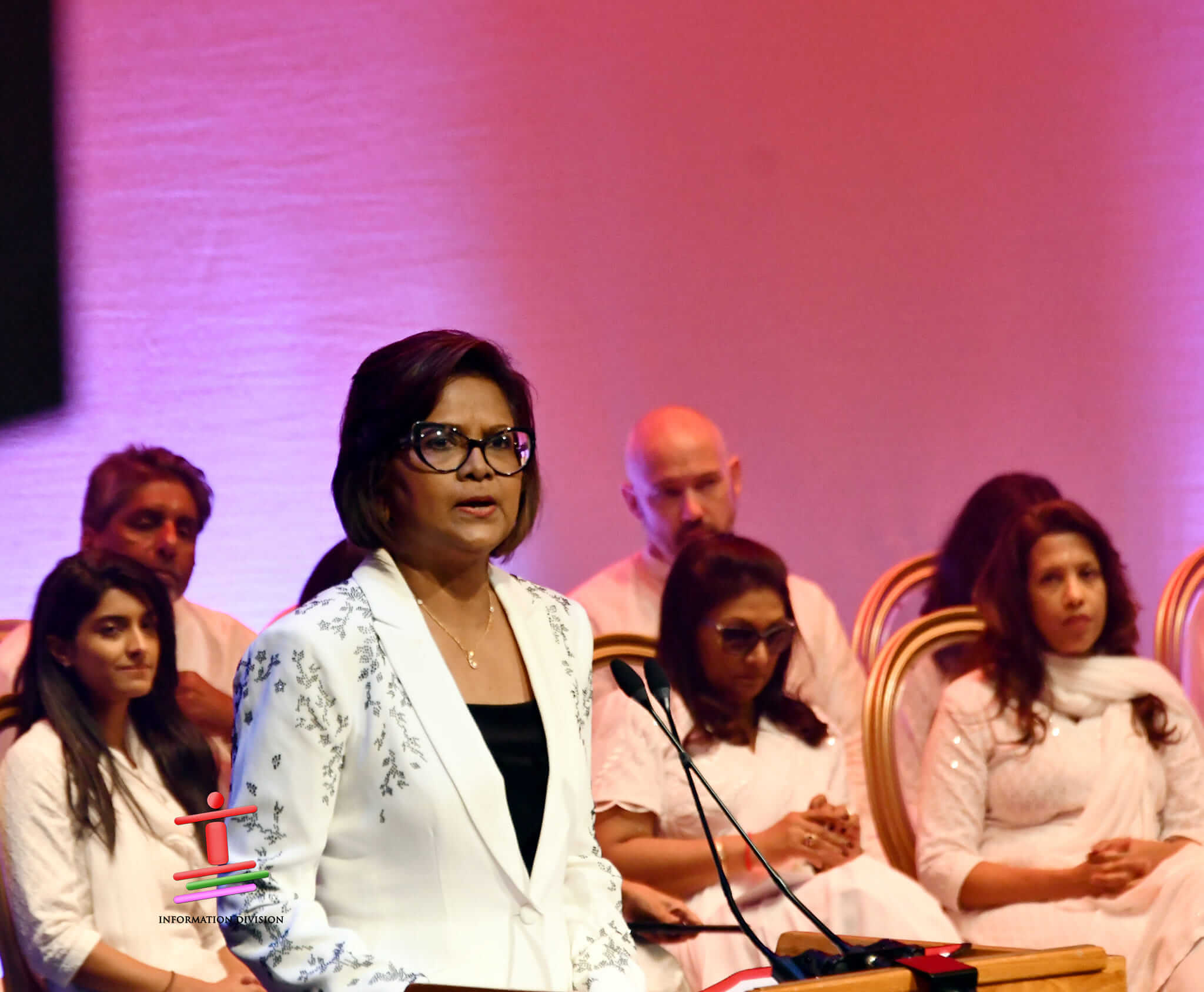
Tribute to the late former Prime Minister Basdeo Panday at his State Funeral

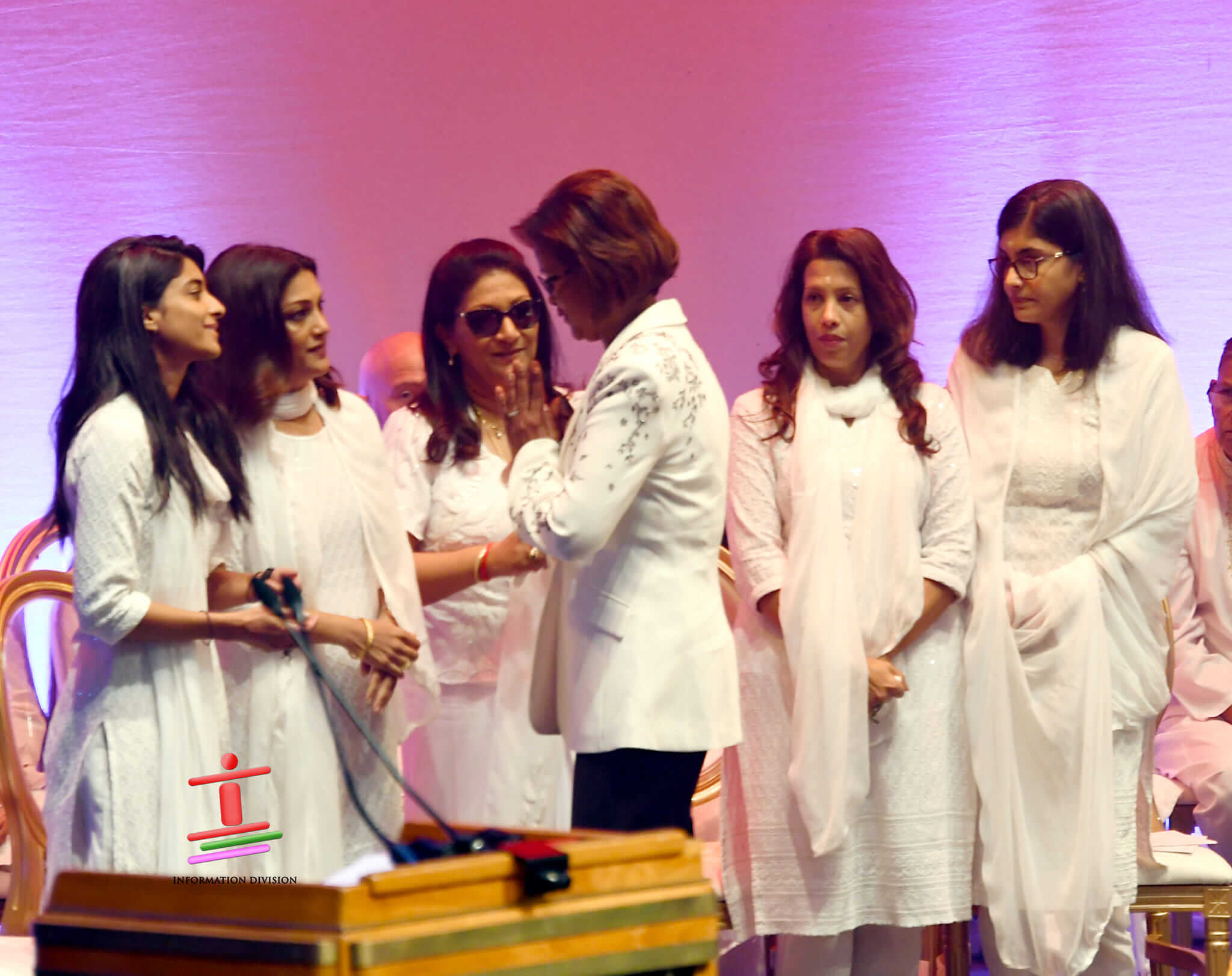
When Basdeo Panday passed from this life on the 1st of January 2024, Trinidad and Tobago lost more than just its 5th Prime Minister. We lost one of the largest and most colourful figures in the modern history of the Caribbean. We lost a man who blazed a trail like few others before him ever had, and like few others ever will again. We lost a feisty fighter, who faced every battle head-on: winning some and losing some along the way; at times hurting his opponents; at times, hurting himself. We lost a man who yielded no ground during his 90 years. We lost a man who lived his life to the full and who, in the course of doing so, set the national landscape on fire.

From Princes Town to Port of Spain; from Couva North to the Caribbean; from the Bahamas in the North to Guyana in the South – Basdeo Panday was a man who fascinated a region with his charm and enthralled a nation with his wit. Mind you – that wit could turn from delightfully charming to devastatingly caustic at the drop of a hat; something that I observed first-hand when I sat across the floor from him in Parliament during the period 2007 to 2010. During that period – in what turned out to be the sunset years of his political career – he would, on the occasions when he was not waxing lyrical in the course of a contribution, often sit with his head buried in a book, never looking up, almost daring those on the opposite side to interfere with his peace. Woe betide the unsuspecting soul who dared to do so. We all learned early on not to trouble the Lion when he was at rest. And, even though the Lion has now entered into another state of rest, many of us who learned that lesson were so traumatised that, to today, we remain a little apprehensive about saying anything even remotely critical of him, lest we awaken his ire once more!

Basdeo Panday certainly had enough people who were critical of him during his lifetime. He had his fair share of detractors. That is hardly surprising. As a meteor blazes its trail across the sky, it burns everything that is in its path, because that is the nature of a meteor’s existence. And, since Basdeo Panday was one of the brightest meteors in the country’s galaxy, it would not be surprising if, in his wake, he burnt bridges at times. But Basdeo Panday also had at his side, his friends with whom he built indestructible bridges and long and lasting relationships; and his family, whom he loved more than life itself. Doubtless, it was they who gave him strength when the days grew dark, as sometimes they did, even in his colourfully brilliant life. I remember when Basdeo Panday first impressed himself unto my consciousness. And I remember what impressed me then, the most about him.

The year was 1984. My brother Wendell has just been called to the Bar, and my father had called together a few of his friends to a celebration at our home in St. Joseph Village, to mark the occasion. Basdeo Panday was among those friends. What most impressed me about him that evening, was not his legendary charm or his delightful wit. What struck me the most about him, was that he was a man completely and utterly in love with life. He and his beloved Oma danced the evening away with complete abandon, moving to the music in a way that even then, in my youth, it was difficult for me and my friends to match. He was to show that same energy, and some of those very dance moves, almost 40 years later when he mounted the stage at Brian Lara’s All-Inclusive Carnival Party recently, to the utter delight of an adoring audience. His energy was as infectious then as it had been at Wendell’s party, and it dawned on me that evening that here was someone who understood and who practised the art of the moment – of giving oneself completely to the present moment, unburdened by a past – which can never be changed, and unafraid of a future – which can never be held.

What also struck me about him that evening at Wendell’s party was the love that he had for his wife, Oma – a love that endured until his dying day. In later years, I would look on, in quiet admiration, at how that love was shared among his family, and especially with his daughters – Niala, Mickela, Nicola and Vastala. Trinidad and Tobago has been lucky enough to witness regular demonstrations of his relationship with Mickela, with whom in later years he would often attend official events. Every time I saw a picture of him and Mickela, I would think to myself what an example he was to fathers everywhere. How I wish that our country’s fathers would model and emulate their closeness. What the nation saw between him and Mickela in public, is what every member of his family felt, away from the public glare. We need to remember that Basdeo Panday was not only a public figure, but that he had an immensely meaningful private life. His family has lost their North Star. We need to remember that they are shattered by this loss, far more than we are.

Although our paths must have crossed innumerable times after that evening of my brother Wendell’s celebration in 1984, my next enduring impression of Basdeo Panday is of him sitting in a courtroom, as a barrister, instructed by my father, waiting for the Judge to enter to commence a trial.  Also present in the courtroom, waiting, were the illustrious Vernon Jamadar and Shaffique Shah, the latter of whom would go on to become a High Court judge. Both of them were of a different political persuasion from my father, as of course, was Basdeo Panday. You can imagine how they ganged up and gave political picong to my poor father that day, with Basdeo Panday leading the charge. But what you probably cannot imagine – and what at times it seems almost impossible to conceive of, in today’s political environment of so much bitterness and of so much acrimony – is the humour, and the affection, and the mutual respect that suffused the banter among these men. It was strong banter, mind you. But when the Judge entered, all four men put their banter aside and set about discharging their respective duties to the court and to their clients respectfully, and without a hint of rancour among them. After the matter ended, they returned to their banter, with renewed vigour, Basdeo Panday being, unsurprisingly, the most vocal among them. What that experience taught me has remained with me throughout my subsequent life in the public space. We can believe in vastly different things, yet be civil to each other; we can hold wildly divergent views on what is good and right for our country, yet treat each other with respect and compassion; we can be fundamentally opposed to each other ideologically, yet remain courteous and gracious to one another.

Whether in or out of the courtroom, Basdeo Panday practised law the way he lived. We might not have the right to tell historians what to say about Basdeo Panday. But I believe that we have a duty to tell them what they ought to know about him. Our historians should know that Basdeo Panday was someone who lived what he believed, especially as a lawyer. He conducted his practice in a way that ensured that those who could least afford to have legal representation could have it through him. My brother Keith tells me that when he, Keith, was in the practice of litigation, many moons ago, there would be clients who would request and insist that the law firm that Keith was in at the time, instruct Basdeo Panday as their barrister/counsel of choice. Keith remembers frequently being shocked when he would get Basdeo Panday’s requisitions for settling a writ and statement of claim – as they were then called. His fees were always significantly lower than other counsel. Basdeo Panday was someone who believed that persons of lesser means should never be deprived of legal representation. But he didn’t just believe it – he walked the talk.

After that day in court with my father and the three goodly gentleman who were opposing him, my next most enduring memory of Basdeo Panday was at my inauguration in March of last year. With the charm for which he had by then become legendary, he locked his eyes with mine, and disarmed me completely with the words: “Congratulations, that was an excellent speech”. Having got me where he wanted me, he then said: “I’m afraid to tell you, though, that you will get nothing done”, paused briefly, and concluded, still smiling, “without constitutional reform”. If there was one thing about Basdeo Panday, it is that he was dogged. Where constitutional reform is concerned, he was like a boa constrictor with its prey in its grip. Stubborn to a fault on that issue, he never let go of his vision for changed arrangements in the way we govern ourselves. But that was the man, and a critical ingredient of his success – he never gave up in a fight.

I wouldn’t dream of trying to eulogise Basdeo Panday. There are those far better equipped than I am to do so. Theirs is the task of capturing, in words, not just the facts and the dates that made up his life, but the essential truth of who he was – his joys and his sorrows; the watershed moments and events that both formed and tested him; the crucibles of secret pains and private triumphs in which his personality and his beliefs were shaped and forged. Few have done so as well as those who have spoken before me this morning. Few will do so as well as Mickela, whom I have had the privilege of preceding this morning. And, insofar as remembering and eulogising him goes, I have no doubt that this is only the beginning, and that Basdeo Panday will continue to be remembered and deeply loved for years to come.

My task is a far simpler one than eulogising him. It is to give thanks, on behalf of a grateful nation, for Basdeo Panday’s service to Trinidad and Tobago and by extension, to the Caribbean and to the international community. And, where Basdeo Panday is concerned, there is much to be thankful for.

On behalf of a grateful nation, I thank Basdeo Panday for the example of grit and determination that he gave us – may his example inspire us all to rise beyond our circumstances and to defeat any obstacle in the way of our path to a better tomorrow. I thank Basdeo Panday for the example of joie de vivre that he epitomised; for the example that his life is, to our young men and women, of how to have a good time, to let go completely to the joy of the moment, not in dark alleyways or with dangerous company, but in the safety and in the bosom of our families. I thank Basdeo Panday for his example to fathers in this country – of how to love and to nurture daughters into self-actualised women, who are not afraid to challenge the status-quo and to claim their due and rightful place, in what was once called the world of men. I thank Basdeo Panday for his being part of an era in which we could be our better selves, and for reminding us that, if we choose, we can disagree without being disagreeable to one another. I thank Basdeo Panday for never giving up the political fight and for becoming the first person of the Hindu faith, and the first person of Indian descent to be Prime Minister of Trinidad and Tobago – and in so doing, breaking down barriers and clearing the way for others to aspire to even greater heights than he himself achieved. But most of all, I thank Basdeo Panday for being an example of a real human being – for being a complex man, often prudent, sometimes rash – but for never pretending to be what he was not. I thank him for having had the courage to be his authentic self.

On behalf of a grateful nation, I thank Basdeo Panday for his life, for his love, and for his service.

May his family find peace and consolation in a nation’s love; and may his soul find salvation and liberation. Om Sadgati.
Share:

PreviousSwearing-in of the Chairman of the Integrity Commission
NextHer Excellency signs Condolence Book for former PM Basdeo Panday

Related Posts

Farewell Courtesy Call: Ambassador of the Republic of Korea

Farewell Courtesy Call: Ambassador of the Republic of Korea

June 2, 2026

Swearing-in of Acting Puisne Judges

Swearing-in of Acting Puisne Judges

May 1, 2020

Message for the International Day for the Elimination of Racial Discrimination 2022

Message for the International Day for the Elimination of Racial Discrimination 2022

March 21, 2022

Her Excellency signs Condolence Book for former PM Basdeo Panday

Her Excellency signs Condolence Book for former PM Basdeo Panday

January 3, 2024

Facebook Feed

Cover for The Office of the President of the Republic of T&T
Page likes: 51,913
The Office of the President of the Republic of T&T(opens in a new tab)

The Office of the President of the Republic of T&T

(opens in a new tab)

The official Facebook Page of The Office of the President of the Republic of Trinidad and Tobago

The Office of the President of the Republic of T&T

21 hours ago

The Office of the President of the Republic of T&T
On Wednesday, November 4, 2026, Their Excellencies Christine Carla Kangaloo, ORTT, President of the Republic of Trinidad and Tobago, and Kerwyn Garcia, SC, First Gentleman, attended the 40th Annual Divali Nagar on the sixth night of celebrations. Their Excellencies were first hosted to dinner by members of the National Council of Indian Culture (NCIC) Board of Directors before joining the evening's official proceedings on the main stage.The evening featured displays of talent, creativity and cultural expression as finalists took to the stage for the Trin India Youth Champ Competition and the Meena House Dance Competition. Her Excellency also delivered the feature address, speaking on this year's theme, “Viveka – Discerning Truth in the Age of AI”.See below the full text of the address delivered by Her Excellency.𝐒𝐩𝐞𝐞𝐜𝐡 𝐛𝐲 𝐇𝐞𝐫 𝐄𝐱𝐜𝐞𝐥𝐥𝐞𝐧𝐜𝐲 𝐂𝐡𝐫𝐢𝐬𝐭𝐢𝐧𝐞 𝐂𝐚𝐫𝐥𝐚 𝐊𝐚𝐧𝐠𝐚𝐥𝐨𝐨 𝐎𝐑𝐓𝐓, 𝐏𝐫𝐞𝐬𝐢𝐝𝐞𝐧𝐭 𝐨𝐟 𝐭𝐡𝐞 𝐑𝐞𝐩𝐮𝐛𝐥𝐢𝐜 𝐨𝐟 𝐓𝐫𝐢𝐧𝐢𝐝𝐚𝐝 𝐚𝐧𝐝 𝐓𝐨𝐛𝐚𝐠𝐨 𝐚𝐭 𝐭𝐡𝐞 𝟒𝟎𝐭𝐡 𝐀𝐧𝐧𝐮𝐚𝐥 𝐃𝐢𝐯𝐚𝐥𝐢 𝐍𝐚𝐠𝐚𝐫— “𝐕𝐢𝐯𝐞𝐤𝐚—𝐃𝐢𝐬𝐜𝐞𝐫𝐧𝐢𝐧𝐠 𝐓𝐫𝐮𝐭𝐡 𝐢𝐧 𝐭𝐡𝐞 𝐀𝐠𝐞 𝐨𝐟 𝐀𝐈”— 𝟒 𝐍𝐨𝐯𝐞𝐦𝐛𝐞𝐫 𝟐𝟎𝟐𝟔Sita Ram and good evening.It is always a joy to return to Divali Nagar. My husband and I look forward to this visit every year. Its fusion of religion, culture and tradition - and its welcome to people from every community - make it one of the great treasures of our national cultural calendar.For forty years, the National Council of Indian Culture has sustained this living expression of Indo-Trinbagonian heritage and shared it with the whole nation. I thank its leadership and volunteers, whose devotion carries that inheritance forward.This year’s theme, “Viveka - Discerning Truth in the Age of AI,” joins ancient wisdom to one of the defining questions of our time: how are we to remain faithful to truth when artificial intelligence can create false words, false images and false voices that appear real?Viveka is the faculty of discernment: the union of intellect, conscience and wisdom by which we distinguish truth from falsehood and choose responsibly.That call is woven into Divali itself. The deya signifies knowledge dispelling ignorance, while Lord Rama’s return to Ayodhya signifies dharma and truth overcoming deception and ego. The ancient Sanskrit prayer expresses the same longing: “Lead me from the unreal to the real; lead me from darkness to light; lead me from death to immortality.”When it comes to Artificial Intelligence, I think it would do us well to recognize that humanity has been called to discern truth for far longer than there have been computers or algorithms. Our difficulty with truth did not begin with AI. We were wrestling with deception, prejudice and the abuse of power long before the first machine learned to imitate a human voice.The truth is that Artificial intelligence is not some self-originating, moral actor standing apart from us. It is we who design its systems, supply its data, set its objectives and decide how its products will be used. Even where a machine generates the output, human choices remain embedded in its creation and deployment.When it comes to AI, I think it would also do us well to recognize that AI is therefore not the enemy. It can advance medical research, improve education, assist persons with disabilities and help us solve problems of enormous complexity. We should neither fear it blindly nor embrace it uncritically, but govern and use it wisely.The machine did not invent the lie, prejudice or cruelty. What it can do is give old human failings unprecedented speed, scale and credibility. It can make untruth look authentic, and place an innocent person’s likeness or voice into words and actions that were never theirs. The truth is that AI does not create our brokenness; but it can magnify its consequences.I have experienced this personally. Fake social-media profiles and AI-generated videos purporting to feature me have circulated online. Last year, a gentleman came to the Office of the President intending to invest in a scheme which he believed that I had endorsed. His belief rested upon an AI-generated video. The video was false, but it was convincing enough to prompt a real financial decision.That experience brought home to me that discernment in the age of AI cannot be passive. Before we believe, react or share, we must ask where information came from, whether it can be confirmed independently, and whether our eagerness to believe it arises from evidence - or merely from its agreement with what we already wish to be true.Fabricated images and recordings are not the only obstacles to truth. Truth also becomes harder to discern when fear enters public life, when untested allegations acquire the appearance of fact, when rumour fills the place of reliable information, or when the tone of public discussion makes silence seem safer than honest disagreement.In such conditions, people do not cease to have opinions; they become reluctant to express them. Suspicion grows, trust recedes and misinformation finds fertile ground. A healthy democracy must permit difficult questions and respectful criticism, while requiring all of us to distinguish allegation from evidence and to speak truthfully, fairly and responsibly.Words, too, require discernment. In the age of AI, each of us can become not only a recipient of information, but its unwitting publisher and amplifier. Before forwarding or repeating, we should ask whether it is true, whether its context has been preserved and what consequences may follow once it travels beyond our control. The wider our reach, the greater our duty of care.A focus of my Presidency is young people. When it comes to AI and young people, I believe that our young people must learn not merely to operate intelligent machines, but to remain intellectually independent in their presence. AI can assist research and overcome barriers to learning; but an answer generated, is not necessarily an answer understood. Education in the age of AI must therefore cultivate curiosity, source-checking, ethical judgment and confidence in their own authentic voices.Beyond the nation’s youth, I believe that there is also a vital cultural task before us. AI can help preserve and share our records, oral histories, music, art and traditions. Yet systems trained mainly upon larger societies may misunderstand, flatten or omit the distinctive voice of a small and plural nation such as ours. Technology may preserve a recording; but only communities can preserve its meaning. That is why Divali Nagar matters in the age of AI. It is not culture summarized, but culture lived - in worship, performance, food, craft, voluntary service and the meeting of one generation with another.As Trinidad and Tobago embraces artificial intelligence, we must ensure that its benefits do not belong only to those with wealth, technical expertise or access to the best-resourced institutions. AI must serve human dignity, not reproduce old prejudices in new forms, and must remain transparent enough to be questioned, accountable enough to be corrected and inclusive enough to serve every community.Although Viveka comes to us from Hindu thought, its call to truth, wisdom and moral responsibility speaks across every faith and culture. In our multi-religious and multicultural society, our traditions are not obstacles to technological progress. They are among the moral resources by which progress can be kept human.The defining question is not simply whether machines will become more intelligent, but whether human beings will become more discerning. Will we use these extraordinary tools to enlarge knowledge and opportunity, or to manufacture deception and deepen exclusion? The answer will not be found in technology alone, but in the quality of our judgment and the courage with which we remain faithful to truth, and to the pursuit of “Viveka”. Our challenge is to let artificial intelligence enlarge our capacities, but never replace our conscience; to let it assist our judgment, but never excuse us from exercising it.In the age of AI, may that ancient Sanskrit prayer continue to guide us: from the unreal to the real; from darkness to light; from ignorance to understanding. And may the light that we kindle in our deyas also kindle within us the wisdom to recognise truth, the courage to speak it responsibly, and the humanity to use it for the good of all.I thank the NCIC once again for the extraordinary gift that is Divali Nagar, and for inviting the nation to consider a theme so important to our time. In the age of AI, the lamp of Viveka must remain in human hands.I wish you and the entire nation a happy and holy Divali.Shubh Divali, and may God bless our nation.-END- ...

Photo

View on Facebook (opens in a new tab)
· Share

Share on Facebook (opens in a new tab) Share on Twitter (opens in a new tab) Share on LinkedIn (opens in a new tab) Share by Email (opens in a new tab)

The Office of the President of the Republic of T&T

2 days ago

The Office of the President of the Republic of T&T
#AsItHappens Following dinner with members of the Board of the National Council of Indian Culture (NCIC) and invited guests, Their Excellencies Christine Carla Kangaloo, ORTT, President of the Republic of Trinidad and Tobago, and Kerwyn Garcia, SC, First Gentleman, arrive at the main stage at Divali Nagar for this evening’s highly anticipated programme.Tonight, the spotlight is on talent, creativity and cultural expression as the finalists take to the stage for the Trin India Youth Champ Competition and the Meena House Dance Competition.It’s competition night at the Nagar! ...

Video

View on Facebook (opens in a new tab)
· Share

Share on Facebook (opens in a new tab) Share on Twitter (opens in a new tab) Share on LinkedIn (opens in a new tab) Share by Email (opens in a new tab)

The Office of the President of the Republic of T&T

3 days ago

The Office of the President of the Republic of T&T
#HappeningNowTheir Excellencies, Christine Carla Kangaloo, ORTT, President of the Republic, and Kerwyn Garcia, SC, First Gentleman, are greeted by NCIC President Dr. Surujdeo Mangaroo and First Vice President Professor Arvind Singh, along with their spouses, upon their arrival at Divali Nagar. ...

Video

View on Facebook (opens in a new tab)
· Share

Share on Facebook (opens in a new tab) Share on Twitter (opens in a new tab) Share on LinkedIn (opens in a new tab) Share by Email (opens in a new tab)

The Office of the President of the Republic of T&T is with Trinidad and Tobago Orchid Society.

4 days ago

The Office of the President of the Republic of T&T
As Patron of the Trinidad and Tobago Orchid Society, Her Excellency Christine Carla Kangaloo, ORTT, President of the Republic of Trinidad and Tobago, joined in marking a special milestone at the Society’s 70th Anniversary Exhibition on Saturday, October 31, 2026.From the stunning variety of blooms on display to the knowledge and passion of the orchid growers and enthusiasts who nurture them, the exhibition showcased seven decades of dedication to orchid cultivation in Trinidad and Tobago.📸🌸 For more photos: flic.kr/s/aHBqjDb7cZ ...

Photo

View on Facebook (opens in a new tab)
· Share

Share on Facebook (opens in a new tab) Share on Twitter (opens in a new tab) Share on LinkedIn (opens in a new tab) Share by Email (opens in a new tab)

The Office of the President of the Republic of T&T

6 days ago

The Office of the President of the Republic of T&T
#AsithappensTheir Excellencies Christine Carla Kangaloo, ORTT, President of the Republic of Trinidad and Tobago, and Kerwyn Garcia, SC, First Gentleman, arrive at the Naparima Bowl for “Echoes of Gold” – Celebrating 50 Years of Musical Excellence earlier this evening. The concert, presented by the Southernaires Choir, is being held held under the patronage of Her Excellency. ...

Video

View on Facebook (opens in a new tab)
· Share

Share on Facebook (opens in a new tab) Share on Twitter (opens in a new tab) Share on LinkedIn (opens in a new tab) Share by Email (opens in a new tab)

Categories

  • Appointments
  • Courtesy Calls
  • Featured
  • Galleries
  • Media Releases
  • Messages and Speeches
  • Multimedia
  • News & Events
  • Other Events
  • Presentations of Credentials
  • Publications
  • Videos

  • THE PRESIDENT
  • Christine Carla Kangaloo
  • Role and Function
  • Extracts from the Constitution
  • The President’s House
  • Forms of Address
  • History of the Presidency
  • Did You Know?

  • TRINIDAD AND TOBAGO
  • National Anthem
  • National Symbols
  • National Holidays and Festivals
  • State Structure
  • National Awards
  • Ceremony
  • Database/Past Ceremonies

  • NEWS AND EVENTS
  • Press Releases
  • Messages and Speeches
  • Appointments
  • Presentations of Credentials
  • Courtesy Calls
  • Other Events
  • Galleries

Contact

President of the Republic of Trinidad and Tobago
Office of the President
Circular Road
St Ann’s
The Republic of Trinidad and Tobago

Telephone: (868) 225-4687
Email: otp.mail@otp.gov.tt

Designed by Elegant Themes | Powered by WordPress